Here for a Healthier Community

Preventing elder abuse fraud

Preventing elder abuse fraud

No one wants to see their elderly loved ones fall victim to a crime. Yet, older adults are disproportionately targeted by fraudulent scams. In fact, in 2021, more than 92,000 victims over the age of 60 reported losses of $1.7 billion to the Internet Crime Complaint Center (IC3). This represents a 74 percent increase in losses over 2020. Losing money or possessions to scams, fraud, and exploitation can be especially devastating to older adults, who may not be able to earn back what they’ve lost. In most cases, though, scams can be prevented before they start — and, as a caregiver, you can encourage your loved ones to take steps to protect themselves against fraud.

1. Appoint a trusted contact for accounts and investments. Your loved one can contact his bank or brokerage or visit its website for information on how to add you as a trusted contact. A bank or financial institution will then be able to reach out to you about questionable activity. Similarly, if your loved one gives you view-only access, you can help him monitor transactions on his accounts to be sure there isn’t any fraudulent activity.

2. Sign up for a service that tracks bank accounts, investments and credit cards. Tools such as EverSafe and LifeLock can provide your loved one with frontline protection in detecting scams, fraud and identity theft. These services can also be set up to notify a trusted contact of potential fraud. Some services may even offer support in reporting and recouping any losses.

3. Stay in touch. Reminding your loved one of what to look out for can go a long way in safeguarding his financial security. Encourage him to consult you before making big financial decisions. It’s also a good idea to tell him not to answer calls from numbers he doesn’t recognize, in order to avoid possible scams.

If your loved one does fall victim to elder fraud, it’s important to report the incident right away, even if you don’t have all the details. You may file a complaint with the IC3 by visiting ic3.gov or by contacting your local Adult Protective Services office. The U.S. Department of Justice’s National Elder Fraud Hotline (833-372-8311) is also a great resource and can help guide you through reporting procedures.

It can be natural to experience feelings of frustration if your loved one is the target of a scam. However, it’s important to have empathy. Chances are that he already feels regret and may even be embarrassed. If you remain calm, it will increase the likelihood that your loved one will alert you to suspicious contact in the future, rather than keeping silent about it.

To learn more about common elder abuse scams, we invite you to attend Senior Care Network’s Noon Hour lecture “Don’t Be Scammed!” on Wednesday, June 28, 2023.

Are you a family caregiver? Senior Care Network is here to help. We offer professional assistance; referrals to important resources; and support and educational groups specifically designed for family caregivers. For more information, call us at (626) 397-3110 or (800) 664-4664. You may also email us at [email protected].

Sources: AARP; FBI; IC3; and U.S. Department of Justice.
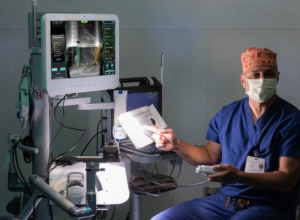
Huntington Health is the first in San Gabriel Valley to Offer Aquablation Therapy, the First and Only Image-Guided, Heat-Free Robotic Therapy for the Treatment of Benign Prostatic Hyperplasia (BPH)

Huntington Health is the first in San Gabriel Valley to Offer Aquablation Therapy, the First and Only Image-Guided, Heat-Free Robotic Therapy for the Treatment of Benign Prostatic Hyperplasia (BPH)

Huntington Health, a Cedars-Sinai affiliate, announced today that it is the first hospital in San Gabriel Valley to offer Aquablation therapy for the treatment of lower urinary tract symptoms (LUTS) due to benign prostatic hyperplasia (BPH).

Aquablation therapy is performed by the AquaBeam™ Robotic System, the first FDA-cleared, surgical robot utilizing automated tissue resection for the treatment of LUTS due to BPH. Aquablation therapy combines real-time, multi-dimensional imaging, automated robotics, and heat-free waterjet ablation for targeted, controlled, and immediate removal of prostate tissue. Combining both cystoscopic visualization and ultrasound imaging, surgeons can create a personalized treatment plan tailored to each patient’s anatomy. Once the map is complete, the robotically controlled, waterjet ablates the prostate tissue, avoiding critical structures to preserve sexual function and continence. Proven in numerous clinical studies, Aquablation therapy offers predictable and reproducible outcomes, independent of prostate anatomy, prostate size, or surgeon experience.

“We are proud to be the first hospital in the San Gabriel Valley to offer a solution for men with BPH that provides significant, long-lasting symptom relief with lower risk to their sexual function and continence,” said Armen Dikranian, MD, medical director of robotic surgery, Huntington Health. “Aquablation therapy is the much anticipated next step to furthering our commitment to robotic surgery and men’s health.”

BPH, or an enlarged prostate, is a non-cancerous condition where the prostate has grown to be larger than normal. 1 in 2 men ages 51 to 60 have BPH, and the incidence increases every decade of life.

“BPH is one of the most common conditions affecting men’s health as they age,” said Ramin Khalili, MD, medical director of urology, Huntington Health. “It’s important that men talk to their physician and/or urologist if they are experiencing changes in urination, such as frequency, urgency, retention and incontinence.”

If left untreated, BPH can cause significant health problems, including irreversible bladder or kidney damage, bladder stones, and incontinence. Current BPH surgical treatments often force men to tradeoff between symptom relief and side effects, limiting patients to choose between either a high degree of symptom relief with high rates of irreversible complications such as incontinence, erectile dysfunction, or ejaculatory dysfunction, or a low degree of symptom relief with low rates of irreversible complications.

For more information about this procedure and other surgical procedures as Huntington, visit: huntingtonhealth.org/surgery

For more information on Aquablation therapy, visit: aquablation.com

Pool Safety: What You Need to Know for a Safe Swimming Season

Pool Safety: What You Need to Know for a Safe Swimming Season

Huntington Health Trauma Expert says Preparation is the Key to a Safe Summer at the Pool

The school year is winding down, summer is around the corner and that means more children are splashing into swimming pools, whether in a backyard, at summer camp, or at recreation center pools. 

Along with the fun, though, are the very real dangers of drowning and other pool related injuries. According to the Centers for Disease Control and Prevention, more children 1-4 years old die from drowning than any other cause of death.

The Cedars-Sinai Newsroom spoke with Amal Obaid-Schmid, MD, medical director of Trauma Services at Huntington Health, a Cedars-Sinai affiliate, about how to keep the children in your care safe this summer.

What are the most important pool safety rules?

Any owner of a pool should first and foremost ensure that they have a fence at least four feet high around their pool.

If children or non-experienced swimmers will be in the pool, it’s very important to have adult supervision. I think asking another child to watch after their sibling, for example, is not adequate. You need a supervisor who’s an adult, who is not distracted with their cell phone, or a phone call inside the house, or a conversation with another adult, really taking that role very seriously. Not letting your eye off the child is huge because drowning can happen in an instant.

Have a variety of flotation devices in and around the pool, including a life jacket, but also floating noodles or a paddle board that a drowning person can grab onto to help them get out of the pool quickly.

Have a cell phone in the pool area so that you can call for help immediately. And adults involved in pool activities should learn basic CPR.

Describe the basic CPR method?

Place the person on their back and gently lift their chin and tilt their head back.

Pinch their nose and place your mouth tightly over their mouth and administer two short breaths. Then start chest compressions, placing one hand over the other and placing them over the patient’s breastbone and administering 30 compressions. Start again with the two breaths and compressions until the patient starts breathing.

Timing is crucial so call for help and start administering CPR as quickly as possible.

What other pool related injuries should parents watch out for?

At the Emergency Department, we see significant head injuries and spinal cord injuries that come from reckless diving, and this happens more among teenagers and young adults.

To prevent diving injuries, make sure pool-goers are only using existing diving boards that are designed to dive into deep water. We see catastrophic injuries from diving from unsafe places such as roofs or patios, or diving head-first into shallow water.

Many of these injuries are alcohol related. Alcohol and swimming don’t mix. Your risk of a drowning or a near-drowning event increases 37-fold when you are consuming alcohol while swimming.

What is “dry drowning?”

Dry drowning is when you’ve had a near-drowning event that resulted in water getting into your lungs and that stimulates what’s called laryngospasm. What that means is that your airway is basically closed off so you are not getting enough oxygen and this can occur from several hours to 24 hours after the event.

The signs may be subtle and can present as coughing, vomiting, not being able to talk, or just not appearing well. if this happens you need to go to the Emergency Department or call 911 right away. Although it is very rare, dry drowning can be fatal.

The key to a fun and safe pool experience is prevention. If you have the right safety equipment and proper supervision, you can prevent most pool related injuries and drownings.

Huntington Health presents Heart of Huntington Award

Huntington Health presents Heart of Huntington Award

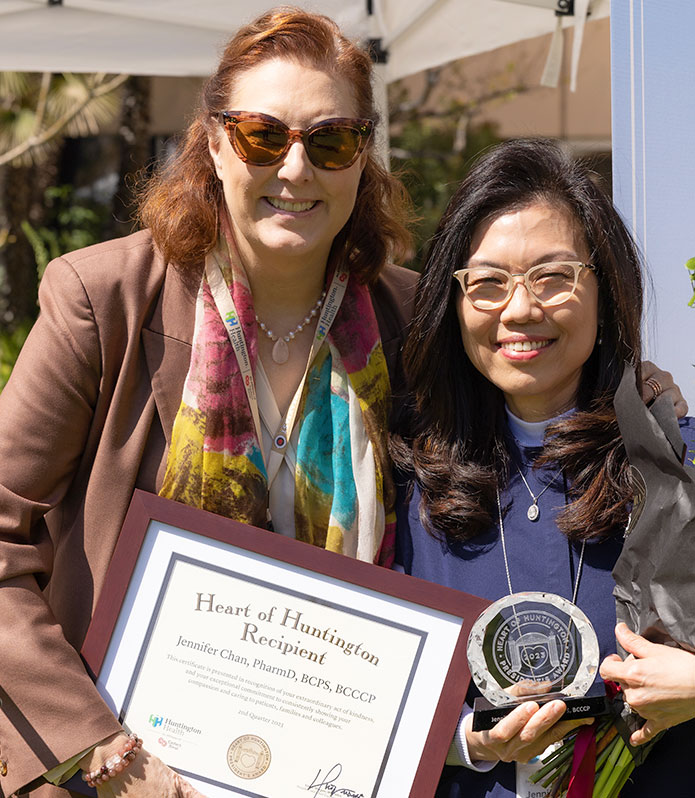
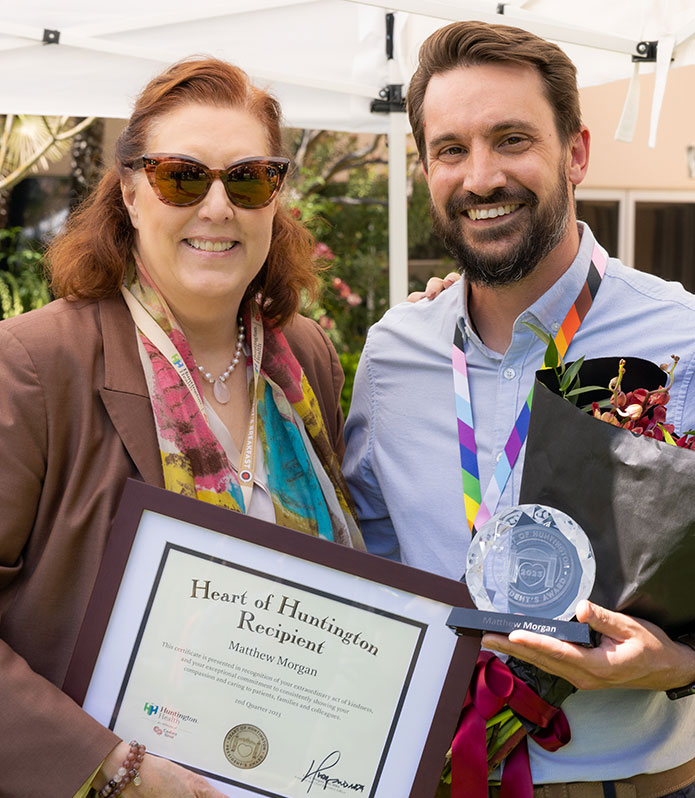
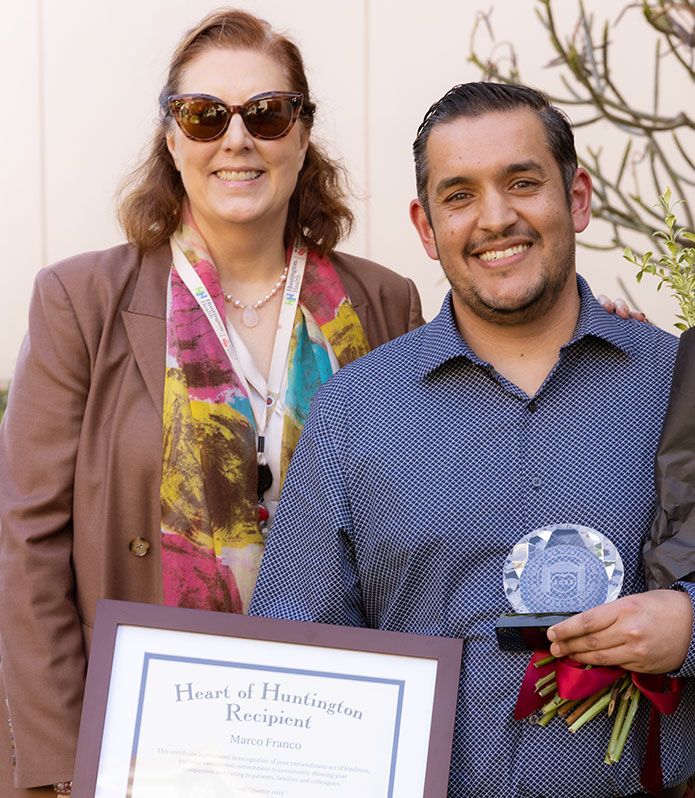
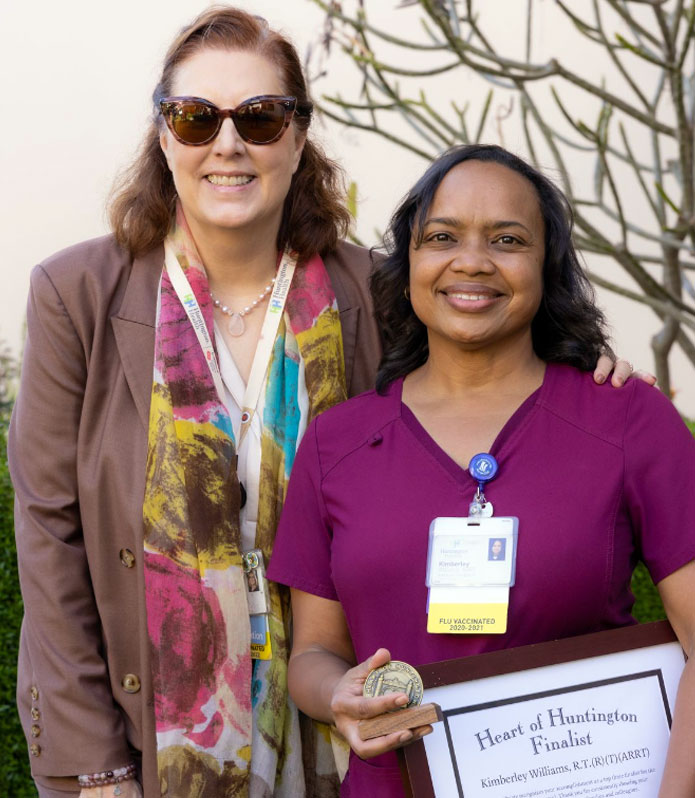
Recently, Huntington held its sixth Heart of Huntington award ceremony, a peer-to-peer recognition program that honors employees, physicians and volunteers for their extraordinary acts of kindness to patients, their families and one another. The award is presented quarterly to clinical and non-clinical individuals.

Lori J. Morgan, MD, MBA, president and CEO, Huntington Health, recognized Jennifer Chan, PharmD, BCPS, BCCCP, pharmacist specialist; Matthew Morgan, staff development specialist; Marco Franco, simulation lab coordinator; and Kimberley Williams, radiation therapist at Huntington Cancer Center.

Heart of Huntington winner, Jennifer Chan, PharmD, BCPS, BCCCP, pharmacist specialist
Jennifer Chan, PharmD, BCPS, BCCCP, pharmacist specialist

Jennifer received the clinical award for prioritizing patient safety and being a valuable “bridge” between pharmacy, IT, nurses, physicians and patients. Her colleagues applauded her intelligence, kindness, dependability, and most of all, her support. Jennifer’s efforts to help staff prepare for the transition to CS-Link is one of the many ways she has supported her colleagues. In fact, going out of her way to help others is a hallmark of her service.

“It’s clear that Jennifer has done everything she can to make this a safe place for our patients to receive care and to cultivate a work environment in which our staff and providers feel well supported. Thank you for your hard work,” said Dr. Morgan.

Heart of Huntington winner, Matthew Morgan, staff development specialist
Matthew Morgan, staff development specialist

Matthew, one of two non-clinical recipients, was acknowledged as an excellent educator with a sincere desire to help others understand complex issues. He provides ongoing training for our clinical staff and enthusiastically engages, motivates and inspires those he trains. Matthew’s willingness to help in any situation and his compassionate approach to connecting and collaborating with his colleagues makes them feel valued and cared for.

“Whether addressing IT issues in our Simulation Lab or helping with Stop the Bleed training, Matthew maintains a relentlessly optimistic and cheerful approach to his work. Thank you for being there for your colleagues to ensure they are equipped to deliver the highest quality care for our patients,” Dr. Morgan said.

Heart of Huntington winner, Marco Franco, simulation lab coordinator
Marco Franco, simulation lab coordinator

Marco was also a non-clinical recipient, recognized for his respect, compassion and dedication while helping staff deliver world-class health care. Despite ever-changing demands, he maintains a calm, professional demeanor and consistently accepts new opportunities. Throughout the pandemic, he went to great lengths to meet our staff and physicians’ rapidly evolving education needs, including developing a step-by-step decontamination (DECON) training video instead of holding in-person lessons, which was prohibited then. Marco also serves as a DECON Team member and a Stop the Bleed trainer at the hospital and community.

“I am incredibly grateful for the concern and care Marco has shown in ensuring that all Huntington staff and physicians are prepared to provide safe and effective patient care,” Dr. Morgan said.

Heart of Huntington winner, Kimberly Williams, radiation therapist
Kimberly Williams, radiation therapist

Dr. Morgan also recognized clinical finalist, Kimberley Williams, commending her excellent judgment with a patient who recently suffered a stroke and exhibited troubling symptoms after radiation therapy. Kim convinced the patient to undergo an evaluation with a registered nurse, which ultimately identified a health emergency.

“Thank you, Kim, for being attentive to the needs of our patients and taking appropriate precautions to safeguard their health,” Dr. Morgan expressed.

Congratulations to all!

Huntington Health’s Financial Assistance Program

Huntington Health’s Financial Assistance Program

We are committed to making healthcare available to everyone in our community regardless of their ability to pay. Our financial assistance program helps low-income, uninsured or under-insured patients who need help paying for all or part of their medically necessary care.

If your income is at or below 400% of the Federal Poverty Guidelines, and you do not meet the qualifications for Medi-Cal you can request financial assistance by completing an application and submitting certain documents. To download a paper application, get help applying, or learn more about our policy, you can:

  • Download the application here. Huntington Health provides the application and policy in the most commonly requested languages via the link below.
  • Talk to someone in the business office between 8 a.m. and 4:30 p.m., Monday to Friday, by calling (866) 803-1777 (translation services available) who can help you download an application and learn more about the financial assistance program.
  • Financial Assistance applications are also available at Huntington main admitting and emergency room departments.
  • Access our full Financial Assistance Discount Policy.

For more details about our financial assistance program and the cost of care, go to www.huntingtonhealth.org/costofcare or call (866) 803-1777.

Pasadena’s Fair Oaks Women’s Health Cements Ties With Huntington Health, A Cedars-Sinai Affiliate

Pasadena’s Fair Oaks Women’s Health Cements Ties With Huntington Health, A Cedars-Sinai Affiliate

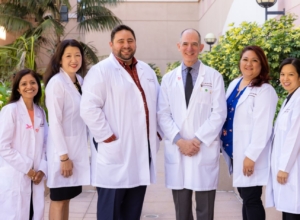
One of the largest, longstanding obstetrical and gynecological practices in the San Gabriel Valley has officially joined Huntington Health, a Cedars-Sinai affiliate. This exciting development delivers the promise of Huntington Health’s affiliation with a world-class health system, enhancing access to local care with providers who patients know and trust.

The six specialists at Fair Oaks Women’s Health will continue caring for patients at their longstanding location on the Huntington Health campus.

“The expert team at Fair Oaks Women’s Health has provided the highest-quality care to patients in Pasadena and surrounding communities for decades,” said Lori J. Morgan, MD, MBA, president and CEO of Huntington Health. “Their physicians have long served on the medical staff at Huntington Hospital and contributed to our Family Birth Center and mother-baby unit, which earned the highest possible designation in U.S. News & World Report’s recent list of ‘Best Hospitals for Maternity Care 2022-2023.’ We are honored to welcome them to the Huntington Health family.”

Fair Oaks Women’s Health obstetric expertise ranges from routine prenatal care to high-risk pregnancy. The practice includes a dedicated ultrasound department, fetal non-stress testing and onsite lab collection. In addition to English, some of its OB-GYNs also are fluent in Spanish and Hindi. An additional specialist fluent in Mandarin will be joining soon as well.

“Welcoming one of the most respected OB-GYN practices in the San Gabriel Valley into Cedars-Sinai Health System not only builds the outpatient network for our affiliate, Huntington Health, but also allows for access to subspecialized care when needed,” said Jill Martin, executive vice president of Cedars-Sinai Medical Network.

Gynecological services offered by Fair Oaks Women’s Health include well-woman exams, pap smears, HPV testing, minimally invasive gynecological surgery (including laparoscopic hysterectomy), abnormal pap smear evaluation and management, birth control including intrauterine devices (IUDs), sexually transmitted infection evaluations, fertility testing, menopause and hormone evaluations and treatments, and more.

The six OB-GYN specialists at Fair Oaks Women’s Health are:

  • Bryan Jick, MD, medical director of Fair Oaks Women’s Health, a certified menopause practitioner credentialed by the North American Menopause Society, whose practice is focused on gynecology. A Fellow of the American College of Obstetricians and Gynecologists, Jick has delivered more than 7,000 babies. He specializes in minimally invasive surgery, menopause and perimenopause, hormone disorders and vaginal laser treatments.
  • Della Fong, MD, a Fellow of the American College of Obstetricians and Gynecologists whose practice includes obstetrics and gynecology. Fong specializes in high-risk obstetrics, minimally invasive surgery and comprehensive wellness. She previously served as chair of the OB-GYN Department at Huntington Hospital from 2021 to 2022 and is fluent in Spanish.
  • Michael Mitri, MD, a Fellow of the American College of Obstetricians and Gynecologists whose practice includes obstetrics and gynecology. Mitri specializes in high-risk pregnancy, minimally invasive surgery and caring for the whole patient.
  • Jennifer Park, MD, a Fellow of the American College of Obstetricians and Gynecologists who focuses on gynecology. Park specializes in menopause and perimenopause, bioidentical hormone therapy and hormonal imbalances.
  • Shweta Shah, DO, a Fellow of the American College of Obstetricians and Gynecologists whose practice includes obstetrics and gynecology. Shah, who specializes in well-woman gynecology, high-risk obstetrics and laparoscopic surgery, also is fluent in Hindi, Gujarati and Kiswahili.
  • Mandy Littlefield, RN, FNP, a board-certified family nurse practitioner. Littlefield focuses on obstetrics and gynecology and patient education. She previously worked as a registered nurse in cardiac and intensive care units, and in interventional radiology.

“We’re excited to become a Cedars-Sinai affiliate, one of the leading healthcare institutions in the country,” said Jick, who founded Fair Oaks Women’s Health. “Joining Cedars-Sinai and Huntington Health will provide access to extraordinary resources and support that will directly benefit our patients for years to come.”

Mental Health Month: How to recognize someone is hurting

Mental Health Month: How to recognize someone is hurting

May is Mental Health Awareness Month, a good time to check-in with our friends, family and colleagues who may be experiencing emotional distress or depression. Sometimes it can be hard to own and admit we are hurting. We may regularly smile and “carry on” in the name of caring for others, before expressing feelings ourselves. Is it possible that a smiling, non-complaining person could be hurting on the inside? Huntington Health’s Mitch Martens, clinical wellness program director, recently compiled a list of eight signs that might indicate someone is hurting and warrant a kind conversation to check-in: 

  1. Lack of Energy. Experiencing poor sleep, eating and exercise. 
  2. Socially Withdrawn. Avoiding people and isolating self. 
  3. Problems Focusing. Making more mistakes and being easily distracted. 
  4. Minimal Motivation. Losing joy in activities and career. 
  5. Change in Baseline. Becoming more cynical, irritable, restless, etc. 
  6. Increased Absences. Not showing up for work or social engagements. 
  7. Substance Use. “Taking the edge off” might be a warning sign. 
  8. Silence. Silence is not always golden and warrants checking in. 

As a reminder, help is available 24/7 by calling the 988 Suicide and Crisis Lifeline, a free national service for help during emotional distress.

In addition, Huntington’s Della Marten Center offers inpatient and outpatient mental health services to support our community. For more, click here.

Huntington Hospital Receives Prestigious Baby-Friendly Designation

Huntington Hospital Receives Prestigious Baby-Friendly Designation

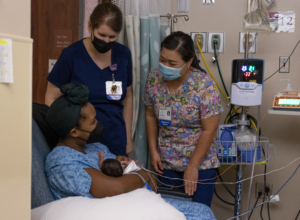
Huntington Health, an affiliate of Cedars-Sinai, is proud to announce that it has achieved the highly prestigious international Baby-Friendly designation after a rigorous review process conducted by Baby-Friendly USA, the organization responsible for bestowing this certification in the United States.

This distinguished honor demonstrates that Huntington Hospital’s women and children services are adhering to the highest standards of care for breastfeeding mothers and their babies. These standards are built on the Ten Steps to Successful Breastfeeding, a set of evidence-based practices recommended by the World Health Organization (WHO) and the United Nations Children’s Fund (UNICEF) for optimal infant feeding support in the precious first days of a newborn’s life.

“Huntington has long been a leader in the care of women and newborns, supporting generations of families in the San Gabriel Valley,” said Gloria Sanchez-Rico, MBA, BSN, RN, chief nurse officer and senior vice president, Huntington Health. “This designation is a tribute to our commitment to ensuring that every woman who delivers a baby at our facility is given the resources, information and support needed to help her and her baby get the best, healthiest start in life.”

The positive health effects of breastfeeding are well documented and widely recognized by health authorities throughout the world. For example, the Surgeon General’s 2011 Call to Action to Support Breastfeeding stated that “Breast milk is uniquely suited to the human infant’s nutritional needs and is a live substance with unparalleled immunological and anti-inflammatory properties that protect against a host of illnesses and diseases for both mothers and children.”

We are extremely proud to be recognized for the hard work of our team members in the across perinatal care areas at Huntington,” said Amy Pendleton, MSN, MPH, director, women’s and children services, Huntington Health.  “A Baby-Friendly designation speaks to the daily efforts of our dedicated nurses and staff to provide birthing people with guidance to successfully initiate breastfeeding and continue breastfeeding when they leave our care, if they choose.”

Huntington joins a growing list of more than 20,000 Baby-Friendly hospitals and birth centers throughout the world. These facilities provide an environment that supports breastfeeding while respecting every woman’s right to make the best decision for herself and her family.

For more information about maternity care at Huntington, go to: Maternity Hospital | Labor and Delivery | Family Birth Center (huntingtonhealth.org)

Huntington Health to welcome John M. Corman, MD, as Senior Vice President and Chief Clinical Officer

Huntington Health to welcome John M. Corman, MD, as Senior Vice President and Chief Clinical Officer
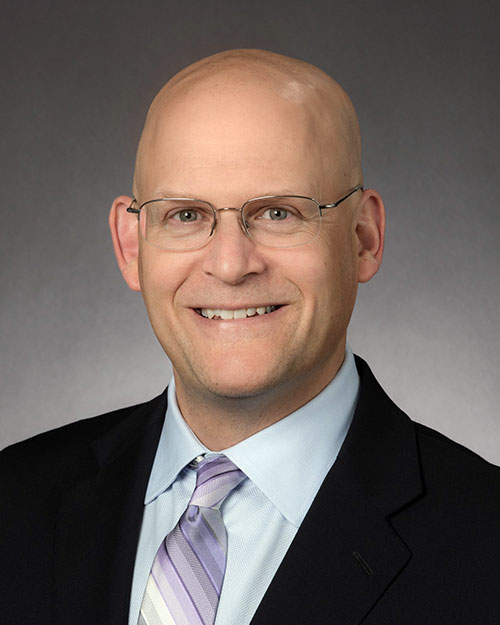
John M. Corman, MD, MBA
John M. Corman, MD

Huntington Health, a Cedars-Sinai affiliate, has announced John M. Corman, MD, will be joining the Huntington enterprise and its executive management team as Senior Vice President and Chief Clinical Officer (CCO), effective May 1, 2023.  He will be working with the 1,015 physicians on medical staff to ensure Huntington remains the preferred place for care in the San Gabriel Valley.

“The search for this key position was filled with careful intent and collaboration with our medical staff leaders to find the right physician leader at this pivotal time in Huntington’s evolution,” said Lori J. Morgan, MD, MBA, president and CEO, Huntington Health. “John is an exceptional fit for our organization, and I’m thrilled to welcome him to the Huntington team.”

Dr. Corman joins Huntington from Virginia Mason Franciscan Health, where he served as vice president and chief clinical officer.  In this role, he engaged with medical leadership to ensure continuity and stability at a time when the regional health care system was taking shape. He has a proven track record in quality oversight and outstanding collaboration with medical staff to support excellent care. Having built his career at Virgina Mason, Dr. Corman has held such posts over the years as senior medical director of peri-operative and procedural services, pathology, radiology, and anesthesiology. He was also medical director of the Virginia Mason Cancer Institute. Clinically, Dr. Corman has completed over 2000 DaVinci surgeries and has been recognized as a Seattle Top Doctor for 16 consecutive years. 

Dr. Corman received his undergraduate degree from Pomona College prior to graduating from Baylor College of Medicine in Houston, Texas. He completed his postgraduate training at UCLA, with an internship in general surgery and residency in urology.  In addition to his staff practice, Dr. Corman has been a clinical professor in various capacities at medical centers and schools throughout the Pacific Northwest for more than two decades. Dr. Corman also has vast administrative experience throughout his various appointments on boards, programs, departments, committees, councils, and educational courses. He has been widely published in such periodicals as the New England Journal of Medicine and the Journal of Urology. 

Important Information About Medi-Cal

Important Information About Medi-Cal

Are you a Medi-Cal beneficiary?  If so, there are some important updates you need to know.

During the COVID-19 pandemic, the government temporarily waived some requirements for Medi-Cal, such as the annual redetermination for services.  This was done to allow continuous Medi-Cal services during a challenging time.  With new laws effective April 1, California will restart yearly eligibility reviews to decide if you still qualify for coverage.

Be sure Medi-Cal has your current address and contact information to ensure you receive your renewal form and watch your mailbox for letters from Medi-Cal.

You can update your address with Medi-Cal and sign up for updates online here:
https://www.dhcs.ca.gov/pages/keep-your-medi-cal.aspx

Or call your local Department of Public Social Services office service center:

Los Angeles County
Department of Public Social Services
Customer Service Center
(866) 613-3777
(626) 569-1399
(310) 258-7400
(818) 701-8200
or the Medi-Cal Helpline number at (800) 541-5555.

This flyer has more information to use and share:
Non-Customizable-Flyer_CalSAWS_ENG.pdf


If you have any questions, or need help, call the Senior Care Network Resource Center at (626) 397-3110 (option 1).