Here for a Healthier Community

Local couple shares story of recovery from life-threatening accident on Angeles Crest Highway

Local couple shares story of recovery from life-threatening accident on Angeles Crest Highway

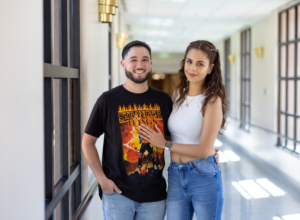
On Easter Sunday 2022, Wendy Sanchez Rodriquez and Jonathan Barba went for a drive along the Angeles Crest Highway when something went wrong — terribly wrong. “What happened next is like a blur,” says Wendy, but one thing was certain: The couple had been in a serious car accident — and their lives hung in the balance.
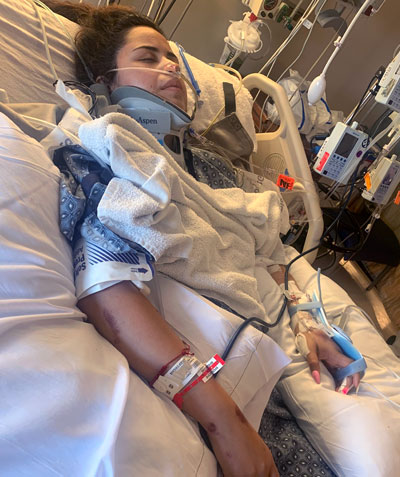
Wendy Sanchez Rodriquez at Huntington Hospital after a car accident
Wendy Sanchez Rodriquez at Huntington Hospital after a serious car accident

Everything happened so fast. Wendy remembers another vehicle almost on top of their car. Paramedics came to the rescue, and Wendy and Jonathan were rushed to Huntington Hospital Trauma Center in a medevac helicopter. They both had life-threatening injuries, including stomach and intestinal damage and many broken bones.

“My next memory is of the bright lights of the operating room and asking for my husband,” says Wendy. Both she and Jonathan underwent extensive surgeries to repair damage to their bones, muscles and organs. Combined, they spent about a month in our critical care unit, before moving to one of our medical-surgical units. “Our doctors said they hadn’t seen a case as bad as us ever before,” says Wendy. “We’re very lucky to be alive!”

While they were facing the long road to recovery from this traumatic accident, Wendy and Jonathan knew they were in good hands, thanks to care from Huntington Health-affiliated physicians Andrew Singleton, MDAmal Obaid-Schmid, MD, medical director of trauma services, Sanjeev Puri, MDIan Ross, MDEdward Kwon, MD, and many others. “The doctors would check in with us each and every day, and it made us feel like they really cared,” says Jonathan.
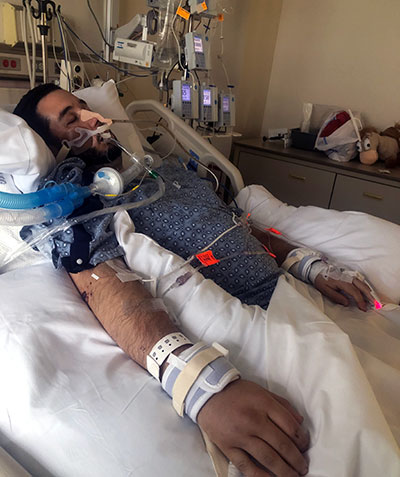
Jonathan Barba at Huntington Hospital after a car accident
Jonathan Barba at Huntington Hospital after a serious car accident

After a lengthy hospital stay, the couple was finally ready to return home and begin their healing journey. “The recovery process has been difficult,” says Jonathan. “We’ve been fortunate to have had help and support from our family every step of the way.”

Today, Wendy and Jonathan are immensely grateful to be alive and are both looking forward to getting back to work — and to planning new adventures. “We want to start travelling more and doing things we normally wouldn’t do,” Wendy says. “Before, we would always put off vacations due to work, but the accident gave us the motivation to just go ahead and schedule trips and be open to new opportunities.”

While they do not remember many of the details of what happened that day, they do remember the quality of care they received at Huntington Hospital. “Huntington saved our lives,” says Wendy. “Telling our story is our way of saying thank you and paying back what they did for us. If anything were to happen to us in the future, it’s where we would want to go. I know we’re in great hands with Huntington.”

Click here to learn more about our lifesaving trauma care.
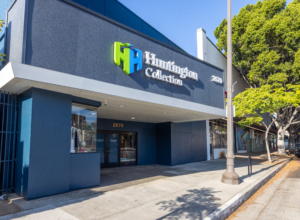
Huntington Collection Donates over $1 million to Senior Care Network

Huntington Collection Donates over $1 million to Senior Care Network

It’s not every day that a resale shop can donate over a million dollars to an important cause, but the philanthropic resale store, Huntington Collection, recently did just that.

This month, Huntington Collection presented a check for $1 million to Senior Care Network (SCN), a nationally recognized program that helps more than 15,000 older adults, adults with disabilities, and family caregivers annually with their goals to live safely in their homes and get the care they need. The donation came from proceeds generated at the East Pasadena resale store, which was recently relocated to its new home 2670 East Colorado Blvd. in August 2022. This is part of a long-standing commitment of Huntington Collection to donate all proceeds to SCN, contributing more than $11 million to SCN since 1984.

But donations are just one part of Huntington Collection’s mission. This beloved furniture, home décor and clothing resale shop’s team also provides many compassionate services to the community. In the early days of COVID-19 when shutdowns were being ordered, its old location on 766 South Fair Oaks Avenue in Pasadena followed regulation. Not skipping a beat, Huntington Collection’s service to the community was immediately repurposed as a warehouse for pallets upon pallets of personal protective equipment, generously donated by the community.

“Our longstanding team at Huntington Collection has shown dedication to our community over and over again,” said Lori J. Morgan, MD, MBA, president and CEO. “It takes a special team to offer support to families when they are parting ways with treasured items, especially in instances where a loved one has passed away or making a difficult move. In addition, throughout COVID-19, our staff members were instrumental in collecting and maintaining the incredible amount of PPE donated by the community for our caregivers. I’m deeply proud of their hard work and commitment to our organization.”

The shop reopened in its new location in summer of 2022 and brought back one of its most helpful services: packing up items for donors and selling these treasured items to the community.  This free service means a lot to the community. Moving is often coupled with lifechanging events like death, divorce or relocating a family for a new job. It’s an emotional time, and the team is there for support – especially for seniors who are downsizing or moving after the death of a spouse. The Huntington Collection team helps donors part with cherished items that cannot fit in a smaller home, like family heirlooms, antiquities from far off lands or intricate textiles from another time. Yet in the face of heartache, donors are comforted knowing that their items will support a good cause.    

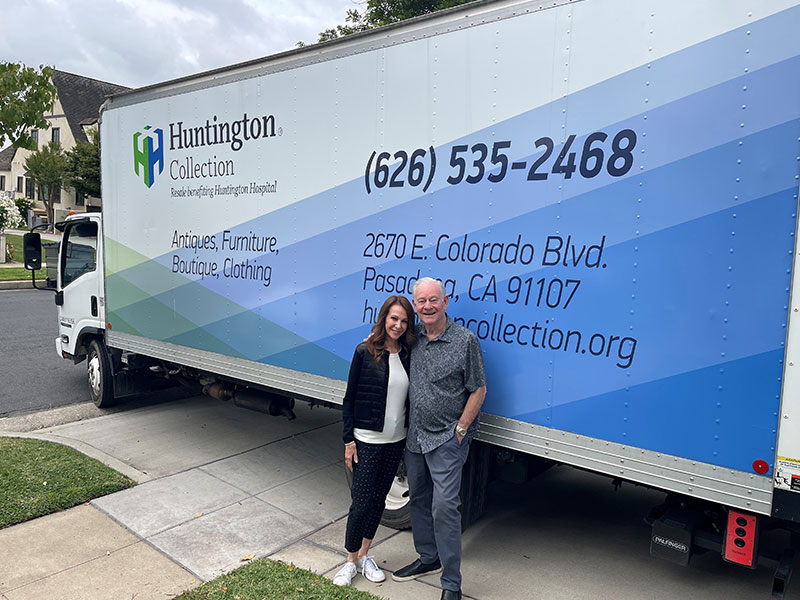
A couple stands in front of a Huntington Collection truck

One couple from San Marino knows this firsthand. They recently downsized to a much smaller home and were advised by their friends to only take the things they love. They tried, but the task at hand proved to be emotionally difficult. The couple was grateful for Huntington Collection’s support. “They thoughtfully went through their treasured memories and selected their very favorites,” said Linda Stroud. “Honestly, it has been a helpful transition just knowing the willingness of the Huntington Collection to pack and pick up the items we cannot take.”

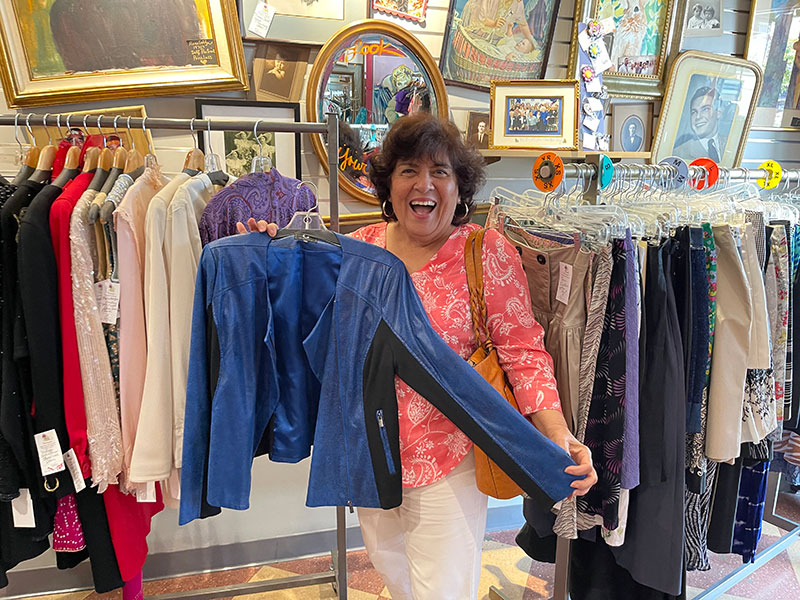
Huntington Collection: A woman is laughing and happy as she holds up an article of clothing next to clothing racks

The other mission of Huntington Collection, of course, is curating great finds for customers. “Finding an item you really love at any store always feels great,” said Anita Espinoza, a frequent shopper at Huntington Collection. “But when buying that item also helps uplift someone in my community, it’s even more special. I’ve been shopping at Huntington Collection for over 20 years and that’s why I love this place. It’s not just retail therapy. It’s compassion.”

Whether they’re helping community members through life transitions, providing loyal customers with pre-loved treasures, or donating more than a million dollars from proceeds to SCN, Huntington Collection has a philanthropic business model that gives in spades – and provides a full circle service to the community it serves.   

Huntington Collection is open Monday – Friday, 10 a.m. to 3 p.m. To learn more about the shop, please visit: www.huntingtoncollection.org

Huntington Health Announces Schedule of Free Flu Shot Clinics to Community

Huntington Health Announces Schedule of Free Flu Shot Clinics to Community

Flu season is just around the corner, and it is important that Pasadenans and our neighbors throughout the San Gabriel Valley and surrounding communities take steps to guard against the flu.

According to the CDC, seasonal flu is associated with large numbers of hospitalizations. These estimates of flu-related hospitalizations highlight flu’s potential severity, and that being sick with flu can also make some health conditions worse (such as lung disease) or lead to other complications that require hospitalization. Flu vaccination is the first and best way to prevent flu and its potential complications. Everyone 6 months and older should get vaccinated against flu yearly, particularly people at increased risk for serious complications including young children, adults 65 years and older, and people with certain chronic medical conditions.

“Please consider getting your annual flu shot at one of our free clinics, at your doctor’s office or at your local pharmacy, and encourage your loved ones to as well,” said Kimberly Shriner, MD, medical director of infection prevention and control, Huntington Health. “And don’t forget all we have learned from COVID-19, if you are experiencing any flu-like symptoms, please stay home and rest. Thank you for keeping our community healthy.”

Huntington Health’s community outreach team are pleased to offer free flu shots at various locations throughout Altadena, Pasadena, San Marino and South Pasadena in the coming months.

Flu vaccine requirements:

• At least 18-years-old, or giving consent for your child, ages 9-17 years

• No allergy to eggs or the influenza vaccine

• No history of Guillain-Barré syndrome

• Do not have a suspected or confirmed COVID-19 infection

• Do not have any COVID-19 or flu-like symptoms.

There is a limited supply of vaccines for each clinic. All sites listed are open to the public. No reservations or appointments are needed and insurance isn’t required. Standard dose will be provided, not the high dose which is recommended for persons 65+.

For a listing of free flu clinics and for more information about the flu, please go to: www.huntingtonhealth.org/flu.

Huntington Health presents Heart of Huntington Award

Huntington Health presents Heart of Huntington Award

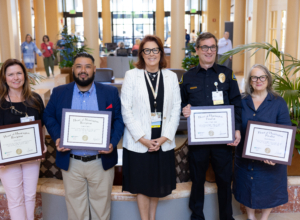
On July 25, Huntington Health held the organization’s seventh Heart of Huntington Award ceremony. Developed as a peer-to-peer recognition program for employees, physicians and volunteers, this quarterly award honors clinical and non-clinical individuals for displaying extraordinary acts of kindness to our patients, their families and one another.

Lori J. Morgan, MD, MBA, president and CEO, Huntington Health, presented Heart of Huntington Awards to Danny Cuellar, patient care associate, emergency services; Karla Marshall, RN, BSN, same-day surgery; Lisa Crave, MSW, clinical social worker, Senior Care Network; and Robert Castleman, security officer.

Danny Cuellar accepted the clinical Heart of Huntington Award after receiving 22 nominations – one of the most nominations received for an individual! He was nominated for always going above and beyond to serve patients and support colleagues. Recently, Danny’s attentiveness helped avert a potential crisis for a young patient with asthma exacerbation. While staff were retrieving equipment to treat the boy, Danny noticed he had stopped breathing. Danny immediately administered mouth-to-mouth resuscitation to supply his brain and body with oxygen. Danny’s quick thinking most likely prevented the young patient from going into cardiac arrest.

“Danny is known by his colleagues for remaining focused on ensuring the safety of his patients and coworkers. He takes appropriate steps to safely diffuse any tense situations that may arise. And, whenever needed, Danny will jump in to ensure lifesaving care,” said Dr. Morgan.

Clinical Social Worker for Senior Care Network Lisa Crave received the non-clinical Heart of Huntington Award. Lisa was nominated for her positive impact on seniors in the community and the great lengths she goes to understand and address their complex problems. One of her recent clients needed to transition into an assisted living facility and was very concerned about what to do with her many prized belongings that lined the walls of her longtime residence. With decreased physical stamina and minimal family support, her client could not relocate her items alone. Lisa worked with several organizations to help clear the home while honoring her client’s dignity and respecting her autonomy to decide about her belongings. 

“Thanks to Lisa’s unrelenting support, patience and creativity, the client successfully moved out of her home and into an assisted living facility of her choosing. As a champion of compassionate community care, Lisa is truly the Heart of Huntington,” Dr. Morgan said.

Dr. Morgan also recognized clinical finalist Karla Marshall for using her warmth, compassion and sense of humor to help a frightened staff member feel more at ease before undergoing hip surgery. Karla, who has worked at Huntington for the past 41 years with experience in the catheterization lab, NICU and education department, used her vast medical knowledge to answer the staff member’s questions and lessen her anxiety.

“It’s awe-inspiring to imagine the countless number of patients whose lives have been similarly touched by Karla’s compassion and expertise for more than four decades of service. I am grateful for her many years of dedicated service to our community,” said Dr. Morgan.

Security Officer Robert Castleman was the non-clinical finalist, nominated for his reliability, patience and professionalism. On one particular shift, Robert demonstrated these skills when he handled a difficult visitor repeatedly attempting to see a patient who, for safety reasons, was not allowed to have visitors. Despite Robert’s courteous explanation, over and over, he had to politely escort the visitor out and remain calm so that others were not alarmed. Even when the visitor attempted to disguise herself, Robert never wavered; he stayed the course until the situation was resolved.   

“While he’s known for taking his job very seriously, Robert always maintains a polite and professional approach to keeping staff, patients and their families safe here on campus, even when dealing with challenging situations. His patience and professionalism are remarkable,” said Dr. Morgan.

Congratulations to our recipients and finalists!

Huntington Health, A Cedars-Sinai Affiliate, welcomes eight physicians to expanded Cardiac, Vascular and Thoracic Surgery Program

Huntington Health, A Cedars-Sinai Affiliate, welcomes eight physicians to expanded Cardiac, Vascular and Thoracic Surgery Program

Eight expert surgeons have recently joined the Cardiac, Vascular and Thoracic Surgery Program at Huntington Health, a Cedars-Sinai affiliate, to offer a wide range of lifesaving and life-enhancing surgeries to local patients. New, innovative treatment options include robotic valve repair, coronary artery bypass grafting, aortic root and arch surgery, surgical treatment of arrhythmias, and minimally invasive thoracic surgery, making this a state-of-the-art program in the San Gabriel Valley.

“We are thrilled to have created this robust program at Huntington Health to serve our community, as it builds on the promise of Huntington care: ensuring our loved ones have greater access to expert care, close to home – at the hospital they know and trust,” says Lori J. Morgan, MD, MBA, President and CEO, Huntington Health. “In addition to the leading interventional and non-invasive options we offer at our Helen and Will Webster Heart & Vascular Center, we now have the best surgical team available around the clock for more complex cases.”

The affiliation between Cedars-Sinai and Huntington Health further enables high-quality care to be offered across the health system.

“We are proud to offer Cedars-Sinai’s world-class clinical programs to the Huntington Health community,” said Eduardo Marbán, MD, PhD, Executive Director of the Smidt Heart Institute and the Mark S. Siegel Family Foundation Distinguished Professor. “These highly skilled surgeons and care teams will continue to spur not only surgical innovations, but also leading research and scientific advances.”

Meet the specialists who have recently joined Huntington Health’s Cardiac, Vascular & Thoracic Surgery Program and are now helping patients in the San Gabriel Valley live longer, healthier lives:

Robbin Cohen, MD, is the Director of the Cardiac Surgery Program at Huntington Health, and Professor of Cardiac Surgery in the Department of Cardiac Surgery at Cedars-Sinai. He is a board-certified cardiac surgeon specializing in adult cardiac surgery, including coronary artery surgery, cardiac valve surgery and surgery of the thoracic aorta.  He also directs the Cedars-Sinai Cardiac Surgery Residency program at Huntington Health. Dr. Cohen and his family live in Pasadena.

Michael Bowdish, MD, is Vice-Chair and Professor of Cardiac Surgery in the Department of Cardiac Surgery at Cedars-Sinai. He is a board-certified cardiac surgeon with a focus on adult cardiac surgery and aortic surgery. He has a special interest in aortic root and arch reconstruction, valve sparing aortic root repairs and hybrid approaches to the aortic arch. Dr. Bowdish is an accomplished clinical investigator funded by the National Institutes of Health and serves as Chair of the National Society of Thoracic Surgeons Adult Cardiac Surgery Database group. Dr. Bowdish and his family live in La Canada Flintridge.

Armin Kiankhooy, MD, is an experienced board-certified cardiothoracic surgeon, an Associate Professor in the Department of Cardiac Surgery at Cedars-Sinai and a long-term member of the Huntington Health team. Dr. Kiankhooy is recognized for his expertise in adult cardiac surgery, structural heart surgery, adult general thoracic surgery and minimally invasive atrial fibrillation surgery. Dr. Kiankhooy and his family live in Pasadena.

Dominic Emerson, MD, is a nationally recognized, board-certified cardiothoracic surgeon, who has established a new robotic cardiac surgery and mitral valve repair program at Huntington Health. Dr. Emerson specializes in minimally invasive cardiac surgery and mitral valve repair, recently successfully performing the first robotic mitral valve repair in the San Gabriel Valley. Dr. Emerson is the Director of Robotic Cardiac Surgery Program at Cedars-Sinai where he serves as an Associate Surgical Director of the Heart Transplant and Mechanical Circulatory Support Program and leads the Thoracic Surgery Accreditation Council for Graduate Medical Education Residency and Fellowship.

Tyler Gunn, MD, is a board-certified cardiothoracic surgeon, Director of the Extracorporeal Membrane Oxygenation (ECMO) Program at Cedars-Sinai and an Assistant Professor of Cardiac Surgery at Cedars-Sinai. Dr. Gunn specializes in heart failure surgery, aortic surgery and coronary bypass. He shares his time between Huntington Health and the Department of Cardiac Surgery in the Smidt Heart Institute at Cedars-Sinai.

Amirhossein Paymon Mahfoozi, MD, is a board-certified thoracic surgeon. Dr. Mahfoozi specializes in cardiovascular surgery and robotic minimally invasive thoracic surgery, and he does extensive work with lung cancer patients. He shares his time between Huntington Health and Torrance Memorial Medical Center and is part of Cedars-Sinai’s Thoracic Surgery Program. Dr. Mahfoozi is fluent in English and Farsi.

Sally Schonefeld, MD, is a board-certified vascular surgeon. Dr. Schonefeld specializes in dialysis access and the treatment of endovascular aneurysm repair, carotid artery disease, peripheral arterial disease, mesenteric disease, and venous disease, including the treatment of varicose veins. She serves patients primarily at Huntington Health.

Theodore Teruya, MD, FACS, is a board-certified vascular surgeon. Dr. Teruya works exclusively at Huntington Health, specializing in dialysis access and the treatment of endovascular aneurysm repair, carotid artery disease, peripheral arterial disease and venous disease, including the treatment of varicose veins. Dr. Teruya is a distinguished fellow of the Society of Vascular Surgery.

For more information about the Cardiac, Vascular and Thoracic Surgery Program at Huntington Health go to: huntingtonhealth.org/cardiovascularteam 

Huntington Hospital is Nationally Recognized for Its Commitment to Providing High-quality Stroke Care

Huntington Hospital is Nationally Recognized for Its Commitment to Providing High-quality Stroke Care
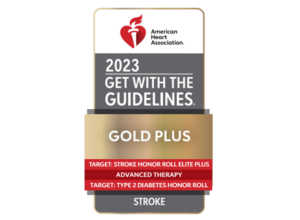
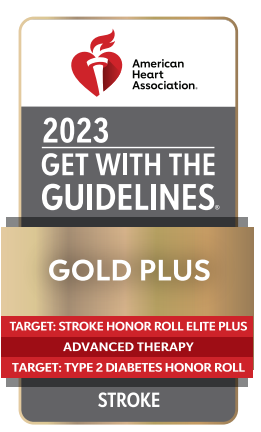
American Heart Association Award: 2023 Get with the Guidelines - Gold Plus - Stroke
The American Heart Association presents Get With The Guidelines® – Stroke Gold Plus Award for proven dedication to ensuring all stroke patients have access to best practices and life-saving care

Huntington Hospital has received the American Heart Association’s Get With The Guidelines® – Stroke Gold Plus quality achievement award for its commitment to ensuring stroke patients receive the most appropriate treatment according to nationally recognized, research-based guidelines, ultimately leading to more lives saved and reduced disability.

“Putting the American Heart Association’s latest stroke guidelines to work is essential to providing our patients with the best stroke care. With these research-based guidelines, we can drastically improve patient recovery,” said Arbi Ohanian, MD, medical director of Huntington Health’s Comprehensive Stroke Program. “Being recognized for several Target designations – especially the Advanced Therapy award – is a testament to our dedication to ensuring our patients can experience longer, healthier lives.”

Stroke is the No. 5 cause of death and a leading cause of disability in the U.S. A stroke occurs when a blood vessel that carries oxygen and nutrients to the brain is either blocked by a clot or bursts. When that happens, part of the brain cannot get the blood and oxygen it needs, so brain cells die. Early stroke detection and treatment are key to improving survival, minimizing disability and accelerating recovery times.

Get With The Guidelines puts the expertise of the American Heart Association and American Stroke Association to work for hospitals nationwide, helping ensure patient care is aligned with the latest research and evidence-based guidelines. Get With The Guidelines – Stroke is an in-hospital program for improving stroke care by promoting consistent adherence to these guidelines, which can minimize the long-term effects of a stroke and even prevent death.

Each year, program participants qualify for the award by demonstrating how their organization has committed to providing quality care for stroke patients. In addition to following treatment guidelines, Get With The Guidelines participants also educate patients to help them manage their health and recovery at home.

“We are incredibly pleased to recognize Huntington Hospital for its commitment to caring for patients with stroke,” said Steven Messe, MD, volunteer chairperson of the American Heart Association Stroke System of Care Advisory Group and professor of neurology and director of fellowships of neurology at the Hospital of the University of Pennsylvania. “Participation in Get With The Guidelines is associated with improved patient outcomes, fewer readmissions and lower mortality rates – a win for health care systems, families and communities.”

Huntington Hospital also received the American Heart Association’s Target: Stroke Elite Plus Honor Roll award. To qualify for this recognition, hospitals must meet specific criteria that reduce the time between an eligible patient’s arrival at the hospital and treatment with the clot-buster alteplase. 

In addition, Huntington Hospital received the American Heart Association’s Target: Stroke Advanced Therapy Honor Roll award by meeting specific criteria that reduce the time between an eligible patient’s arrival at the hospital and treatment to remove the clot causing the stroke.

Huntington Hospital also received the American Heart Association’s Target: Type 2 Diabetes Honor Roll award. The guideline aims to ensure patients with Type 2 diabetes, who might be at higher risk for complications, receive the most up-to-date, evidence-based care when hospitalized due to stroke.

Huntington Hospital also met specific scientific guidelines as a Comprehensive Stroke Center, featuring a comprehensive system for rapid diagnosis and treatment of stroke patients admitted to the emergency department.

You or a loved one doesn’t have to wait for a stroke to happen to see a neurologist. If you are having unexplained symptoms, such as uncontrolled headaches, challenges with your balance, vertigo (dizziness), or numbness or tingling, it may be best for a neurological exam.

For more information about strokes, visit: What Is A Stroke?

About Huntington Health

Huntington Health, www.huntingtonhealth.org, an affiliate of Cedars-Sinai, offers the full spectrum of care for every need: Whether at our hospital, urgent care, ambulatory surgery center, cancer center or doctor’s office, we’re here to care for the physical, mental and social well-being of every person. Huntington Hospital is home to the largest emergency department and only level-II trauma center in the San Gabriel Valley. And our Family Birth Center and level-III neonatal intensive care unit (NICU) give babies the safest start to life.  Learn more about us on social media: Facebook, Twitter and Instagram

About Get With The Guidelines®

Get With The Guidelines® is the American Heart Association/American Stroke Association’s hospital-based quality improvement program that provides hospitals with the latest research-based guidelines. Developed with the goal of saving lives and hastening recovery, Get With The Guidelines has touched the lives of more than 12 million patients since 2001. For more information, visit heart.org.

Hematologist-Oncologist, Niki Patel, MD, Joins Huntington Cancer Center at Huntington Health, A Cedars-Sinai Affiliate, Focusing on Adolescent and Young Adult Breast Cancer Patients

Hematologist-Oncologist, Niki Patel, MD, Joins Huntington Cancer Center at Huntington Health, A Cedars-Sinai Affiliate, Focusing on Adolescent and Young Adult Breast Cancer Patients
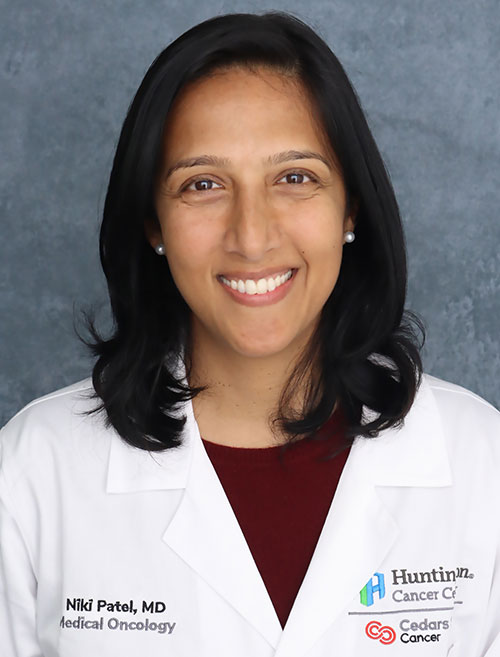
Niki Patel, MD
Niki Patel, MD

Niki Patel, MD, a fellowship-trained hematologist-oncologist board certified in internal medicine and medical oncology, has joined the Division of Medical Oncology at Cedars-Sinai Cancer. She is treating patients in Pasadena at Huntington Cancer Center at Huntington Health, a Cedars-Sinai affiliate. Patel provides clinical care for patients with breast cancer, with a particular focus on adolescents and young adults.

“Dr. Patel is a terrific addition to the Huntington Cancer Center team,” said Dan Theodorescu, MD, PhD, director of Cedars-Sinai Cancer and the PHASE ONE Distinguished Chair. “She excels at treating patients and working in clinical trial development and survivorship care—all key in offering the highest-quality service throughout the communities we serve. Working closely with young people who have been diagnosed with breast cancer is of special interest to Dr. Patel, and we are gratified to benefit from her expertise.”

Patel earned her medical degree from the George Washington University School of Medicine and completed an internal medicine residency at Cedars-Sinai, where she later served as chief medical resident. She completed a hematology-oncology fellowship at City of Hope and later directed the City of Hope Hematology-Oncology Fellowship Program.

“We greatly value all that Dr. Patel brings to breast cancer patients at Huntington,” said Howard Kaufman, MD, regional medical director of Huntington Cancer Center. “She is known for her compassion, kindness and utmost competence, and we’re thrilled that patients throughout the San Gabriel Valley have the opportunity to be treated and cared for by her.”

Patel said that she values the caring, family feel that Cedars-Sinai and Huntington Cancer Center are known for, especially the connection to patients.

“The human element of medicine is what has always most appealed to me, and that is an important part of the Cedars-Sinai culture that I’ve also found at Huntington Cancer Center,” Patel said. “Through oncology, I enjoy developing meaningful relationships with patients and offering them the most innovative treatment options—both of which can change the face of their cancer journey.”

Patel’s career was inspired by her father, a pediatrician in a small, central California town. Some of her most cherished memories are of accompanying him to the hospital nursery to check on patients, and even going with him on house calls.

“I loved that he got to help make people feel better,” Patel said. “I grew up wondering why everyone wouldn’t want to do this as a career.”

Throughout her residency at Cedars-Sinai, Patel was impressed with the team’s approach to compassionate patient care. During her third year, while working with breast cancer patients, she found her calling.

Patel has a special interest in exploring how food, exercise and intermittent fasting can improve care for all cancer patients and survivors. In her work with adolescents and young adults with breast cancer at Huntington Cancer Center, she strives to make sure patients feel more empowered.

“The teen years, 20s and 30s are a pivotal time, and when you are told you have breast cancer and you have to take a big pause in your life for treatment, or you are going through surgery that could be disfiguring, it can feel devastating,” she said. “This demographic especially needs someone they can feel comfortable talking to. If all we do is focus on the medicine, we’re losing half the game. It’s important to me to spend as much time talking about what else is going on in patients’ lives as it is talking about their cancer.”

Pasadena Student works with Huntington Health to Develop and Test Handwashing Technology for Health Care Facilities

Pasadena Student works with Huntington Health to Develop and Test Handwashing Technology for Health Care Facilities

Pasadena teen and 2023 Polytechnic School graduate, Adrian Lazzi, has launched Puriphico, a patent-pending technology with the mission of promoting a healthier world by encouraging proper handwashing in health care environments.

Washing and scrubbing of the hands for at least 20 seconds, according to the World Health Organization (WHO) prevents 50% of all hospital-acquired infections. Moreover, where hand sanitizer might not be able to kill certain harmful pathogens (such as C. Difficile), handwashing can. That’s what led Adrian, when he was only in 8th grade, to first start conceptualizing a handwashing technology to support infection prevention.

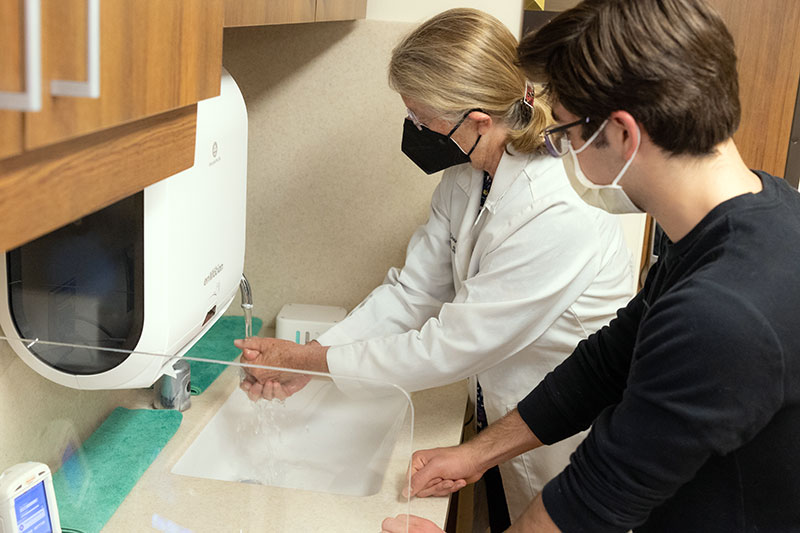
Similar to an electric toothbrush, which notifies the user after two minutes have passed, the Puriphico device notifies the user using LED cues after 20 seconds of handwashing (the minimum recommended time necessary to eradicate nearly all harmful pathogens and bacteria, per CDC guidelines). The difference, besides their different applications, is that the user does not need to “start” a Puriphico device by pressing a button. Instead, Puriphico devices can automatically recognize when someone is washing their hands using an AI-based hand recognition algorithm, and assist them accordingly. Adrian’s observations of the efficacy of electric toothbrushes to his own dental hygiene habits, is what led him to apply the same principles to handwashing. 

“Over three and a half years of constant iteration, generously funded by the Olah, Dragon Kim, Paws for Humanity, and Atlas fellowships, through Polytechnic school, we’ve developed beta prototypes accurate and reliable enough for hospital testing,” says Adrian.

“Adrian’s insatiable curiosity and creative and facile mind made this project a true labor of love, said John Bracker, Head of School, Polytechnic School. “With the support of several generous donors and organizations, he pursued his interest while learning from some of the best in the world at Huntington Hospital.”

Adrian Lazzi showing how to wash your hands

Under the guidance of Kimberly Shriner, MD, medical director of infection prevention and control at Huntington Health, Adrian’s pilot test and experiment at Huntington has already yielded remarkable results. “When I first met Adrian, I was immediately impressed by his ingenuity and drive to create a device to support important infection prevention measures,” says Dr. Shriner. “I’m so proud of the work he has achieved in helping keep caregivers and patients safe and he now has solid scientific data to further his development of this technology.”

Huntington Health’s Vice President of Quality Improvement and Clinical Operations, Nirav Kamdar, MD, adds: “It’s been truly inspiring to see and support Adrian through his Puriphico product development and testing at Huntington. Innovating medical devices is a long and arduous process and it is inspiring to see a young student see a problem, create a prototype, and investigate it like a scientist. Behavioral feedback devices like this would be a great support to clinical professionals in all types of health care settings. I think he has a bright future ahead of him and excited to see how University inspires him; I hope he makes Huntington Hospital a home to tinker with novel solutions for patients.”

“We’ve observed marked and quantifiable improvements in handwashing compliance in just a matter of weeks, and are preparing to deploy more devices in the hospital for large-scale testing soon,” says Adrian. “My goal is that by helping healthcare workers maintain effective handwashing habits, Puriphico will ultimately help save lives.”

For interviews and additional information, please contact Dorey Huston, PR and Media Manager, Huntington Health at (818) 303-5402.

Huntington Health Pediatrician and Search-and-Rescue Volunteer Offers Tips for Safe Hiking This Summer After Record Winter Storms

Huntington Health Pediatrician and Search-and-Rescue Volunteer Offers Tips for Safe Hiking This Summer After Record Winter Storms

Record rain this winter wreaked havoc on Los Angeles area hiking trails, damaging roads and dumping snow at lower elevations than normal. As the weather heats up, and the last of the snow melts, day hikers should plan ahead to avoid on-trail hazards caused by the unusually heavy rainy season.

John Rodarte, MD
John Rodarte, MD. Photo courtesy of John Rodarte, MD.

 “Trails got washed out, and the vegetation got washed out. In some instances, actually, the roads even getting to those trails are washed out and continue to be to this moment,” said John Rodarte, MD, a pediatrician with Huntington Health, a Cedars-Sinai affiliate.

Rodarte also is a reserve deputy sheriff with Montrose Search and Rescue, a team of volunteers that helps the Los Angeles County Sheriff’s Department respond to emergencies in the Angeles National Forest and San Gabriel Mountains. As a volunteer, Rodarte has treated injured hikers, bike riders, drivers and motorcyclists. Those with traumatic injuries are sometimes airlifted by helicopter to nearby Huntington Hospital, where Rodarte works. 

“It’s great having Huntington Hospital in our local community of the mountains because it’s a Level II trauma center where we can send our patients,” Rodarte said. “I love being on staff there because I can also follow up on patients that I see in the field.”

Rodarte spoke with the Cedars-Sinai Newsroom about some of the hazards that hikers might encounter on the trails this summer and how to deal with them or avoid them altogether.

Damaged Trails and Roads

Heavy rains carved narrow gashes into some hiking trails while washing out others altogether or leaving trees or large rocks blocking their paths. Some roads sustained such significant damage from rockfall and other debris that they remain closed.

Eroded trails can give way, causing hikers to fall and get injured. Hikers can get turned around on a washed-out trail, ultimately getting lost. “The next thing you know, darkness comes on and they can’t find their way back again,” Rodarte said.

Rodarte recommends checking online sources for the latest information on trail and road conditions before heading out. The latest comments or reviews in hiking apps like AllTrails, and real-time maps on sites like CalTrans showing current road conditions also can be useful.

“You can find so much,” Rodarte said. “Try to get the latest in terms of what trails [and roads] are actually open and be prepared that it may not be what it seems like when you read about it online.”

Getting Lost and Getting Found

One of the most common scenarios Rodarte sees as a search-and-rescue volunteer is hikers getting caught out on a trail after dark. Hikers might get lost or realize that a trail was more difficult or longer than they had anticipated. “Once it gets dark, it gets very hard to find your terrain, especially if you’re not familiar with that trail already or if it’s overgrown,” he said.

To help increase the chances of being found, hikers should share their plans with others and never hit the trail alone.

“If you don’t get back on time, your family or friends can say, ‘They were supposed to be back by 6 tonight. It’s now 8, 9 at night,’ which is probably the time we get most of our callouts for the rescue team when someone hasn’t come home,” Rodarte said.

For hikers who need to be rescued, the best thing to do is stay put.

“That way we’re not chasing you while you’re still moving,” Rodarte said. “The hardest thing to do is to find a moving target. So, if you can stay put for the night, find someplace safe, then we can come out and kind of look where your last known location was.”

Carrying a loud whistle also can help a hiker flag down rescuers. “It’s so easy to do. Yelling is really, really hard, and after a while you lose your voice. You never want to rely on just trying to yell out for help,” Rodarte said.

Poisonous Plants

Southern California exploded with color after the rain, as green grasses, yellow mustard and orange poppies have blanketed the hills. But among that beauty lurk some poisonous plants, like the deceptively pretty poodle-dog bush, which flourishes after a fire. 

“It’s a beautiful plant. It has this really nice, beautiful purple stalk with purple flowers that come up, and I’ve seen people picking it in the forest before,” Rodarte said. “Poison oak may give you a rash for a couple of weeks. Poodle-dog bush may give you that same kind of rash all over for a couple of months. So, avoid both of those if you can.”

Poison oak vines with their clusters of three green leaves that turn orange over the summer also have flourished on overgrown trails. Like the poodle-dog bush, the oils from this plant ignite a nasty rash and can linger on clothing and hiking gear.

Avoid touching either of these plants, and if that’s not possible, wear protective clothing like long-sleeved shirts and long pants. After coming in contact with these plants, wash skin as quickly as possible with soap and water or rinse off the oils with whatever is available on the trail.

Preventing elder abuse fraud

Preventing elder abuse fraud

No one wants to see their elderly loved ones fall victim to a crime. Yet, older adults are disproportionately targeted by fraudulent scams. In fact, in 2021, more than 92,000 victims over the age of 60 reported losses of $1.7 billion to the Internet Crime Complaint Center (IC3). This represents a 74 percent increase in losses over 2020. Losing money or possessions to scams, fraud, and exploitation can be especially devastating to older adults, who may not be able to earn back what they’ve lost. In most cases, though, scams can be prevented before they start — and, as a caregiver, you can encourage your loved ones to take steps to protect themselves against fraud.

1. Appoint a trusted contact for accounts and investments. Your loved one can contact his bank or brokerage or visit its website for information on how to add you as a trusted contact. A bank or financial institution will then be able to reach out to you about questionable activity. Similarly, if your loved one gives you view-only access, you can help him monitor transactions on his accounts to be sure there isn’t any fraudulent activity.

2. Sign up for a service that tracks bank accounts, investments and credit cards. Tools such as EverSafe and LifeLock can provide your loved one with frontline protection in detecting scams, fraud and identity theft. These services can also be set up to notify a trusted contact of potential fraud. Some services may even offer support in reporting and recouping any losses.

3. Stay in touch. Reminding your loved one of what to look out for can go a long way in safeguarding his financial security. Encourage him to consult you before making big financial decisions. It’s also a good idea to tell him not to answer calls from numbers he doesn’t recognize, in order to avoid possible scams.

If your loved one does fall victim to elder fraud, it’s important to report the incident right away, even if you don’t have all the details. You may file a complaint with the IC3 by visiting ic3.gov or by contacting your local Adult Protective Services office. The U.S. Department of Justice’s National Elder Fraud Hotline (833-372-8311) is also a great resource and can help guide you through reporting procedures.

It can be natural to experience feelings of frustration if your loved one is the target of a scam. However, it’s important to have empathy. Chances are that he already feels regret and may even be embarrassed. If you remain calm, it will increase the likelihood that your loved one will alert you to suspicious contact in the future, rather than keeping silent about it.

To learn more about common elder abuse scams, we invite you to attend Senior Care Network’s Noon Hour lecture “Don’t Be Scammed!” on Wednesday, June 28, 2023.

Are you a family caregiver? Senior Care Network is here to help. We offer professional assistance; referrals to important resources; and support and educational groups specifically designed for family caregivers. For more information, call us at (626) 397-3110 or (800) 664-4664. You may also email us at [email protected].

Sources: AARP; FBI; IC3; and U.S. Department of Justice.