Here for a Healthier Community

Huntington Hospital Named to U.S. News & World Report’s 2022-2023 Best Hospitals for Maternity Care

U.S. News & World Report, the global authority in hospital rankings and consumer advice, has designated Huntington Hospital as High Performing in Maternity Care (Uncomplicated Pregnancy). This is the highest rating a hospital can earn in U.S. News’ Best Hospitals for Maternity Care ranking.

The annual evaluation is designed to assist expectant parents and their doctors in making informed decisions about where to receive maternity care. Huntington Hospital earned a High Performing designation by scoring well on multiple measures, including never or rarely scheduling delivery earlier than recommended and excelling in minimizing avoidable C-sections.

“Huntington has had the honor of providing safe, custom birth experiences to generations of families in our community,” said Lori J. Morgan, MD, MBA, president and CEO, Huntington Health. “This distinction is a symbol of our commitment to giving babies the best start in life, providing excellent care and offering support every step of the way. Congratulations, once again, to the dedicated nurses, affiliated-physicians and staff at our Family Birth Center and mother baby unit for earning this designation in maternity from U.S. News & World Report.”

U.S. News evaluated nearly 650 hospitals that provide high-quality labor and delivery services for uncomplicated pregnancies for its 2022-2023 Best Hospitals for Maternity Care ranking. Fewer than half of all hospitals that participated in the survey received a High Performing designation.

“When expectant parents are considering their options for welcoming a baby to the world, the Best Hospitals for Maternity Care are designed to help them identify hospitals that excel in delivering babies for uncomplicated pregnancies,” said Ben Harder, chief of health analysis and managing editor at U.S. News. “A hospital that has earned a High Performing designation may be a good option for parents, in consultation with their medical provider, to consider.”

The U.S. News Best Hospitals for Maternity Care methodology is based entirely on objective measures of quality, such as C-section rates in lower-risk pregnancies, newborn complication rates, exclusive breast milk feeding rates, early elective delivery rates and vaginal birth after cesarean rates.

For more information, visit Best Hospitals for Maternity Care and use #BestMaternityHospitals on Facebook and Twitter.

About U.S. News & World Report

U.S. News & World Report is the global leader in quality rankings that empower consumers, business leaders and policy officials to make better, more informed decisions about important issues affecting their lives and communities. A multifaceted digital media company with Education, Health, Money, Travel, Cars, News, Real Estate and 360 Reviews platforms, U.S. News provides rankings, independent reporting, data journalism, consumer advice and U.S. News Live events. More than 40 million people visit USNews.com each month for research and guidance. Founded in 1933, U.S. News is headquartered in Washington, D.C.

# # #
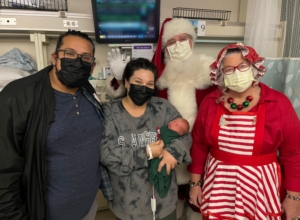
Huntington pediatric and NICU patients receive a special visit from Santa, with a little help from local police departments

Huntington pediatric and NICU patients receive a special visit from Santa, with a little help from local police departments

On December 14, the Pasadena Police Air Operations Section and the Foothill Air Support Team (FAST), along with Santa Claus and Mrs. Claus, touched down from the North Pole (via helicopter) to deliver toys to our pediatric patients!

The 18th annual visit was funded through generous contributions from Pasadena Police employees and officer associations participating in the FAST program throughout the San Gabriel Valley. The donation of toys we received is so large, that we will give them to our pediatric patients throughout the entire coming year.

Thank you to Pasadena Police Chief John Clawson and the Alhambra, Arcadia, Covina, Glendora, Irwindale Monrovia, Pomona, Pasadena, San Marino, Sierra Madre and South Pasadena Police Departments who helped bring holiday cheer to our youngest patients and families!

Huntington Health Presents Heart of Huntington Award to Recipients and Finalists

Huntington Health Presents Heart of Huntington Award to Recipients and Finalists

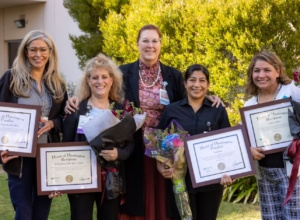
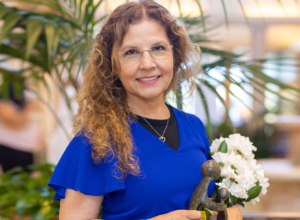
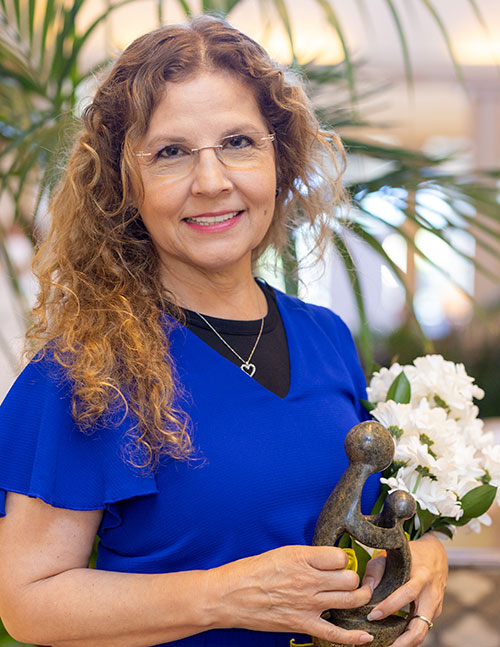
Recently, Huntington held its fifth ceremony to honor four exceptional team members with the Heart of Huntington Award. The quarterly presentation recognizes two recipients and two finalists who have been nominated by their peers for outstanding acts of compassion, caring and collaboration. To acknowledge team members’ various contributions, two categories are recognized: clinical, for those who work at or around the bedside, and non-clinical, for those who support the community in other ways.

During the ceremony, Lori J. Morgan, MD, MBA, president and CEO, Huntington Health, presented the Heart of Huntington Award to clinical recipient Kelli Artinian, RN, BSN, C-EFM, patient flow coordinator at the Family Birth Center, and Mary Ruiz, manager of leave and disability in human resources.

Kelli was nominated for the Heart of Huntington Award when a patient who had just undergone an emergency C-section at the Family Birth Center tearfully requested to bring her newborn to his dying father in the ICU so that he could meet their baby. Knowing the complexities involved and the limited time at hand, Kelli quickly mobilized the team: a pediatrician, neonatologist, obstetrician, a NICU nurse to accompany the baby during the visit, and nurses from day and night shifts to safely transfer the patients using an isolette. Once both patients had been safely escorted to the ICU, the mother lay next to her husband and placed their newborn baby on his chest. The father passed away later that afternoon. “Words cannot describe the significance of the moment Kelli helped create for this family,” said Dr. Morgan. “This story is absolutely heartbreaking but shows how Kelli truly exemplifies the Heart of Huntington.”

Mary Ruiz was the non-clinical recipient of the Heart of Huntington Award following several peer nominations that shared a common theme: praise for a compassionate and dedicated leader. Her colleagues noted how Mary shows deep respect, empathy and thoughtfulness for staff members who are temporarily unable to work, often going above and beyond for their well-being. One nominator recognized the kindness, compassion, resourcefulness and efficiency Mary demonstrated while assisting an employee who was becoming re-situated at work after an extended leave. Mary was also lauded for leading by example: When the volume of her work drastically increased during the pandemic, she put in extra hours during the week and weekends. “We have all been through so much with COVID, and thanks to the support and dedication of colleagues like Mary, we have come out the other side stronger,” Dr. Morgan said.

Dr. Morgan also recognized clinical finalist, Patty Nogueda, RN, BSN, community outreach health practitioner and member of the Pasadena Outreach Response Team, and non-clinical finalist, Ana Cruz, guest relations host in the dietary department.

Patty provides flu and COVID-19 vaccinations on the streets to underserved members of the community. She was commended for her relentless dedication to serving those in need and going above and beyond to serve as many patients as possible – even in rain or extreme heat. Along with vaccines, Patty is armed with water bottles, granola bars and sleeping bags, which she distributes with respect and dignity to patients facing hardship. Renowned for her compassion, at any given event, Patty is often recognized by community members and enthusiastically thanked for her help. “Through her genuine kindness and thoughtful actions, Patty has gained the trust of so many in our community,” said Dr. Morgan.  She thanked Patty for making the community a better place.

Known for her infectious positivity and warm, inviting personality, Ana Cruz was commended as the non-clinical finalist for lifting spirits and making colleagues and patients feel seen. Ana has an incredible memory, so she’s able to recall specific details of any past exchange she’s had with people. She uses this gift to brighten the day of patients and staff, letting them know they are important. Dr. Morgan thanked Ana for helping make Huntington a great place to give and receive care.

Go to huntingtonhealth.org/hoh for more information about the Heart of Huntington Award.

Especially for caregivers: Recognizing depression in older adults

Especially for caregivers: Recognizing depression in older adults

As a caregiver, you have become adept at tending to your loved one’s physical care needs. Navigating his mood swings may be more unfamiliar territory: How do you know if the loved one in your care has a mood disorder like depression?

Depression is more common in older people than you might think. In fact, more than two million Americans age 65 and older suffer from some form of depression. It’s also important to recognize that seniors are at risk for suicide.

Making matters more complicated, older adults may be less likely to talk about their feelings of depression, or to seek mental health treatment. To help ensure your loved one gets the support he needs, it helps to know the signs. While everyone’s experience of depression and suicidal thoughts is different, some common signs and symptoms include:

• Feelings of hopelessness, pessimism, guilt, worthlessness and/or helplessness.

• Irritability and/or restlessness.

• Loss of interest in once enjoyable activities or hobbies.

• Fatigue and decreased energy.

• Difficulty concentrating, remembering details and making decisions.

• Insomnia, early–morning wakefulness or excessive sleeping.

• Overeating or appetite loss.

• Persistent aches or pains, headaches, cramps or digestive problems that do not get better, even with treatment.

• Cutting back on social interaction, self-care and grooming.

• Breaking medical regimens such as diets and prescriptions.

• Experiencing or expecting a significant personal loss.

• Putting affairs in order or changing wills.

• Stock-piling medication.

Depression is a serious health concern, but it can be effectively treated and there is hope. Most older adults see an improvement in their symptoms when treated with medication, psychotherapy or a combination of both.

If you’re concerned about a loved one who may be depressed, offer to go with him to see his health care provider. Huntington Health’s Della Martin Center (DMC) also provides a wide range of comprehensive and compassionate mental health care services and referrals. Services include confidential assessments, diagnosis, treatment and rehabilitation. To learn more about DMC, please call (626) 397-2323.

Are you a family caregiver? Senior Care Network is here to help. We offer professional assistance; referrals to important resources; and support and educational groups specifically designed for family caregivers. For more information, call us at (626) 397-3110 or (800) 664-4664. You may also email us at [email protected]

Sources: CDC and NIH National Institute on Aging.

Congratulations to DAISY Award winner, Laura Salazar RN

Congratulations to DAISY Award winner, Laura Salazar RN
Laura Salazar, RN
Laura Salazar, RN

As a designated Magnet hospital, Huntington is a recognized leader in nursing excellence. Every day, our nurses go above and beyond for our patients, and we are proud to recognize them for their efforts. Huntington Hospital’s recent DAISY Award winner, Laura Salazar RN, NICU, was nominated by an employee who wrote the following:

“This NICU is a special place, full of people who root for one another – people who hope, pray and love with all their might, and people who notice details in every tiny moment. Magic is witnessed nearly daily, most of which goes unnoticed. Lucky for me, I noticed a beautiful moment between one of my colleagues and a NICU parent.

Laura was working in a busy room with me. She was hustling and taking pristine care of her patients. I watched as a nurse wheeled in a parent, placing the wheelchair near her. The parent was crying. It didn’t take Laura long to notice that the tears were not emotional tears, but tears of physical pain. Laura knelt in front of the wheelchair, looked the parent in the eye and said, ‘Why are you crying?’

The parent saw her genuine concern and informed her that an overwhelming physical pain was transpiring. Laura honed in even further, stretching her healing wings when she asked, ‘What do you like to be called?’

The parent told her, and the name was different from the chart. Laura said, ‘I understand. You are safe here, you know that? I will call you by this name, and we will control your pain.’

She called the unit and advocated for adequate pain control. The parent then opened up further, confiding in her that he was undergoing gender affirming surgeries. She held his hand and said, ‘I am proud of you. This was brave of you.’ She nurtured this parent’s heart and soul by validating his feelings and accepting him.

Laura told me later, ‘People want to be loved, fed and feel safe. If we can do that for people, then we can truly care for them and make them feel good from the inside out.’ This is her practice. She loves to love others. This is a nurse I am proud to work with. Laura leads by example and makes her loudest noise sound like unconditional love. This is why nursing is both an art and a science. She makes an art out of loving others.”

Congratulations, Laura, for this well-deserved recognition! For more information about the DAISY Award, click here.

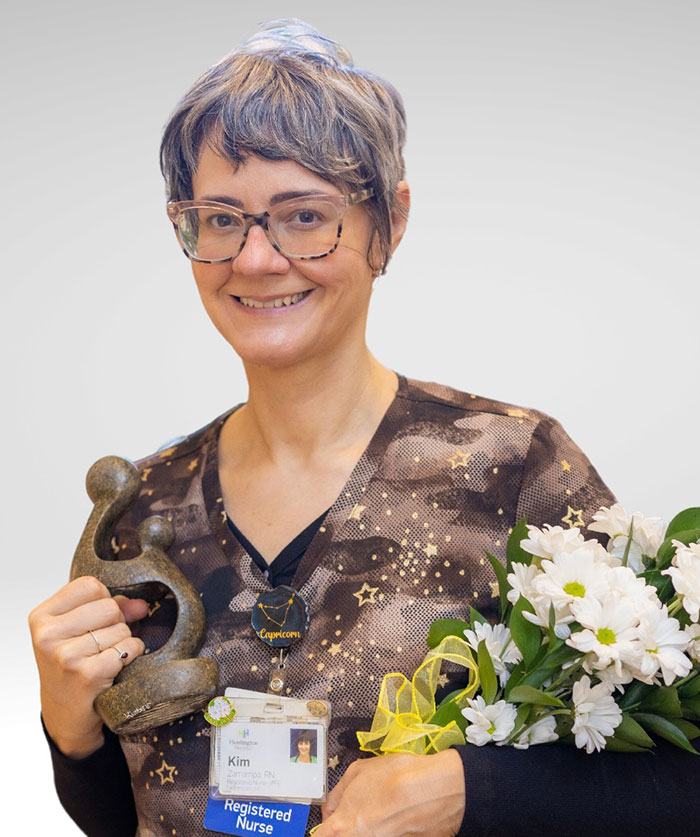
Congratulations to DAISY Award winner,  Kimberly Zamarripa, RN

Congratulations to DAISY Award winner,  Kimberly Zamarripa, RN
Kimberly Zamarripa, RN - Daisy award winner
Kimberly Zamarripa, RN

As a designated Magnet hospital, Huntington is a recognized leader in nursing excellence. Every day, our nurses go above and beyond for our patients, and we are proud to recognize them for their efforts.  Huntington Hospital’s recent DAISY Award winner, Kimberly Zamarripa, RN, was nominated by a patient who wrote the following:

“My mom was admitted to the hospital the day after Thanksgiving. She became critical and transferred from units. When she was moved to her unit a couple of days later, my mom was gifted with this nurse. She is a true angel! Kimberly took so much time to listen to my mom and my concerns about her various medical conditions and had such a calm and comforting presence. We appreciated her gentleness when she cleaned and dressed my mom’s pressure sores, and how she always went through each medication and what they were used for before administering them. Her commitment to her profession is so evident in how she cares for her patients. Kimberly was prompt in answering the call light, no matter how big or small the reason behind the request; she always came with the same serene and pleasant manner. We hope she gets the accolades she so greatly deserves for the exceptional care she gives to her patients. She set the bar very high for every other nurse who follows behind her. I can only hope the rest will take note of her extraordinary skill set and strive to deliver anywhere near her special care!”

Congratulations, Kimberly, for this well-deserved recognition! Click here, for more information about the DAISY Award.

Cedars-Sinai Surgeon to Lead Breast Program at Huntington Cancer Center

Cedars-Sinai Surgeon to Lead Breast Program at Huntington Cancer Center
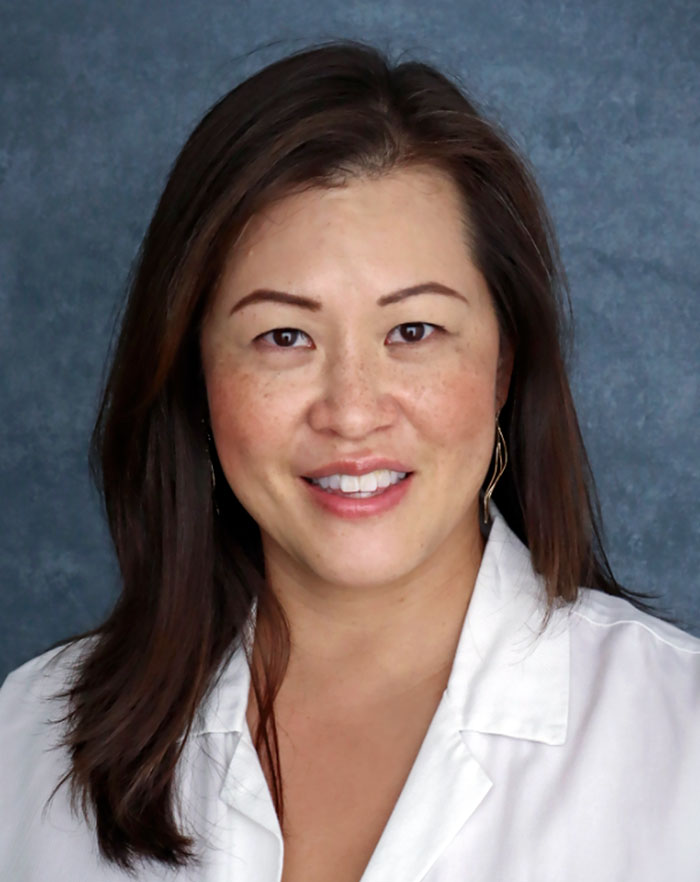
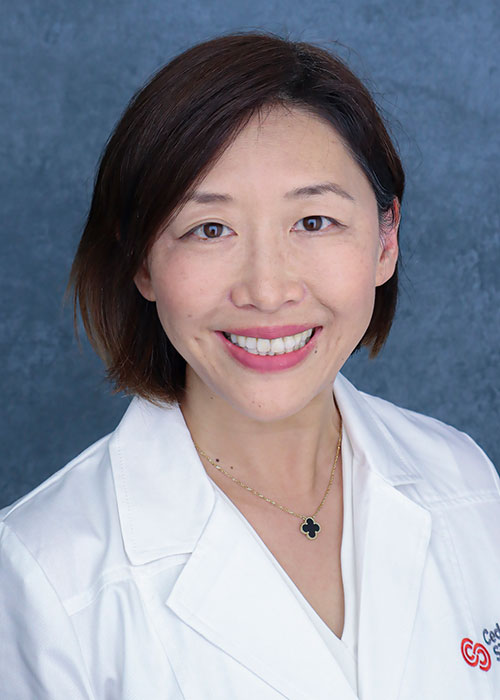
Jeannie Shen, MD
Jeannie Shen, MD

Jeannie Shen, MD, a Fellowship-Trained Breast Surgeon, Is Medical Director of the Breast Program and the International Health Program at the Cedars-Sinai Affiliate

Jeannie Shen, MD, a fellowship-trained breast surgeon who is board-certified in general surgery, has been appointed medical director of the Breast Program at Huntington Cancer Center, an affiliate of Cedars-Sinai Cancer, and medical director of Huntington Hospital International Health.

“Dr. Shen will support the growth and vision of a comprehensive breast program for the San Gabriel Valley, expanding the community’s access to quality cancer diagnostics, treatments and innovative cancer care,” said Armando E. Giuliano, MD, regional medical director of the Cedars-Sinai Cancer Breast Oncology Program.

Shen earned her medical degree and served a general surgery internship and her general surgery residency at the University of California, San Diego, School of Medicine, and completed a breast surgical oncology fellowship at the University of Texas MD Anderson Cancer Center. When Shen trained in the late 1990s and early 2000s, the idea of a breast surgery specialist was fairly new.

“At the time, no special training was suggested for physicians who wanted to go into breast surgery,” Shen said. “But I wanted to be the very best breast surgeon I could be, so I applied for a fellowship. At MD Anderson Cancer Center, I was their second breast surgical oncology fellow, which shows you how new breast fellowships were.”

Shen, who is American-born Chinese and speaks Mandarin fluently, said many of her patient visits are about education—and are often conducted in Mandarin.

“Many patients come in well informed, but there’s just so much to know,” Shen said. “Sometimes it can be difficult for patients to understand what applies to them and what doesn’t. After one recent consult, my patient told me, ‘We’ve been researching online for a week, but now we actually understand what we were reading. We understand the plan, and we feel very optimistic.’”

Shen is also a trained medical acupuncturist and has collaborated with Huntington Cancer Center’s integrative oncology nurse practitioner in clinical trials to test acupuncture as a complementary therapy to address nausea and other common side effects that can occur after breast surgery.

For Huntington Cancer Center’s Breast Program, Shen hopes to maintain a team of high-quality physicians for surgery, reconstruction, and medical and radiation oncology; to provide complementary supportive services; and to open up access for San Gabriel Valley patients to innovative treatments. As medical director of Huntington Hospital International Health, she hopes to broaden the program’s reach further.  

“Cedars-Sinai serves one of the most diverse patient populations in the country,” said Dan Theodorescu, MD, PhD, director of Cedars-Sinai Cancer and the PHASE ONE Distinguished Chair. “As medical director of Huntington Hospital International Health, Dr. Shen will develop initiatives to bring the clinical care and groundbreaking research—such as the Molecular Twin precision medicine initiative—that Cedars-Sinai Cancer is known for, to our patients here and internationally.”

Shen advised women newly diagnosed with breast cancer not to panic.

“The majority of breast cancers identified on screening mammograms are early stage, and the prognosis is very good,” Shen said. “Increasingly, breast cancer treatment plans are personalized and developed to ensure the most effective treatment, while minimizing long-term side effects.”

Shen’s breast cancer prevention advice is to maintain a healthy weight and make time for regular physical activity—at least 30 minutes per day.

“I know we women are busy with our careers and being good mothers, good daughters, good sisters and good wives,” Shen said, “but find time to take care of yourself and prioritize your health. If you are not healthy, you can’t take care of others.”

Supportive Care Oncologist Joins Cedars-Sinai Cancer

Supportive Care Oncologist Joins Cedars-Sinai Cancer

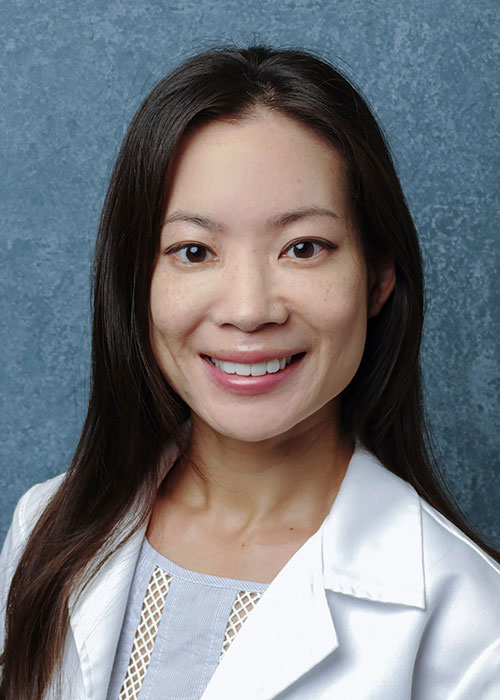
Tiffany Shaw, MD, Now Serves as Regional Medical Director of Supportive Care Medicine 

Tiffany Shaw, MD
Tiffany Shaw, MD

Medical oncologist Tiffany Shaw, MD, has joined Cedars-Sinai Cancer as regional medical director for Supportive Care Medicine at Huntington Cancer Center, an affiliate of Cedars-Sinai Cancer.

Shaw’s work at Huntington Cancer Center will expand upon existing supportive care medicine services offered at Cedars-Sinai Cancer. She will also develop programs for hospice, palliative care and end-of-life research.

“The role of supportive care medicine in cancer care has never been more important, and we are thrilled that Dr. Shaw will be expanding these services to our patients,” said Dan Theodorescu, MD, PhD, director of Cedars-Sinai Cancer and the PHASE ONE Distinguished Chair. “We can now deepen our commitment to offering life-extending treatments and improving quality of life through a holistic and team-centric approach based on supportive care medicine principles.”

Shaw first knew that she wanted to become a doctor at age 4, and by the time she entered medical school, she knew oncology was her chosen field. Shaw received her medical degree from the Lewis Katz School of Medicine at Temple University and completed her internal medicine residency at the University of California, Davis, Medical Center.

Her passion for supportive care medicine came during her medical training, after her aunt was diagnosed with recurrent breast cancer that was no longer curable. She went on to serve as a palliative care and hospice fellow at edars-Sinai and the VA Greater Los Angeles Healthcare System and completed her hematology/oncology fellowship at Olive View-UCLA Medical Center, serving as chief fellow during her last year.

“My aunt refused to see a palliative care expert, and it made me recognize how little people understood the invaluable role of supportive care medicine and how many misconceptions surround these services,” said Shaw. “I really didn’t want patients to have that same misunderstanding, which led me into this important field.”

Cedars-Sinai Cancer’s longstanding supportive care medicine program brings together specialists in pain and symptom management, who can also help patients and caregivers navigate care goals, make treatment decisions and reduce the side effects of cancer therapies.

Shaw says conversations with her patients range in topic from what exercise programs they can participate in to how their diet will affect their treatment plans, and what supplements they can or cannot take.

“Cancer affects every aspect of a person’s life, so it’s important that we identify goals of care, encourage patients to express their preferences regarding medical treatments, and help to ensure that goals are honored,” said Shaw. “Supportive care medicine allows us to treat the whole person, not just their diagnosis. I’m honored to have these important conversations with my patients and their loved ones.”  

Trauma and injury prevention for older adults: How to protect yourself from harm

Trauma and injury prevention for older adults: How to protect yourself from harm

Trauma centers across the U.S. see a lot of life-threatening injuries. The most common “mechanisms of traumatic injury,” as trauma specialists call it, are car accidents and falls. According to Michelle Baker, RN, BSN, manager of trauma services at Huntington Hospital, 49% of the traumatic injuries seen at Huntington are head injuries or hip fractures caused by slips and falls, and 17% are caused by motor vehicle collisions.

But perhaps the most alarming statistic is 50% of those trauma patients are adults 65 years and older. In fact, Baker says that unintentional injury is the seventh leading cause of death for adults 65+ nationwide. And the numbers only get worse: Annually nationwide, it is reported that 36 million older adults experience falls, only 3 million go to the emergency department (ED) for falls, and 32,000 of these falls result in death.

As for driving, the statistics are equally concerning. Every day, 22 older adults die in a motor vehicle collision.    Annually, seniors are involved in 1.6 million collisions, 58,000 are hospitalized, and 8,000 die after a crash. 

But Baker says the good news is that 100% of traumatic injuries are preventable. That’s because trauma and injury prevention go hand in hand, which means prevention education is crucial to avoiding traumatic injuries in the first place. Baker shared some reasons why older adults in particular are at risk for traumatic injuries.

Health History 
Some procedures and conditions can increase injury vulnerability from falls and motor vehicle collisions:

  • Cardiac history, such as high blood pressure, open-heart surgery, stents and pacemakers, can require certain medications that can affect balance and cognitive function.
  • Vision conditions, such as cataracts and prescription changes, can affect the ability to see hazards. 

Medications
Certain medications can cause side effects that can make an otherwise innocuous injury fatal:

  • Blood thinners effect blood clotting, so a fall can cause life-threatening bleeds (hemorrhages) in the brain or other organs.  
  • Blood pressure medication can cause dizziness with a sudden change in body position (e.g., getting out of bed or going from sitting to standing too quickly); dizziness can cause serious falls.
  • Other medications that cause confusion and sedation can increase injury vulnerability, especially if taken before driving or navigating streets or the outdoors.

Not being treated
Seniors may choose to not go to the ED after a fall for several reasons. But Baker says that it is crucial to be seen if you are 65+ and you hit your head.

  • Traumatic brain injury is the most frequent condition among older adults and can be fatal if not identified early.

In addition to these age-related risks, human factors put seniors at risk for traumatic injury. According to Baker, 54% of falls across all ages happen because of not paying attention while ambulating due to texting, talking on the phone and bumping into someone or something. Slippery floor surfaces are the culprit behind 25% of falls (and if the patient is an older adult, the injury is typically worse than a younger person’s) and the rest are caused by tripping over something in the home (e.g., toys, pets, unsecured carpet or area rugs). But the No. 1 factor behind falling for seniors is poor lighting when walking down stairs or on uneven surfaces.

Fortunately, despite all of these factors, seniors can prevent slips and falls and driving injuries by following the suggestions Baker lists:

Maintain musculature

  • Monitor vitamin D levels: Vitamin D deficiency is strongly linked to muscle weakness, which can cause heaviness in legs, difficulty standing up and climbing stairs.
  • Do strength and balance exercises: Exercises such as Tai chi and chair-assisted exercises like single-leg stance, standing marches and sit to stand can help keep muscles strong and can be done safely at home. Search for “older adult balance exercises” on YouTube or Google to see free demos.

Support eyes 

  • Use distance glasses for shopping, walking or being outdoors: Bifocals or progressive lenses make objects look closer or farther than they really are, which can cause falls.
  • Make sure your eye prescription is up to date: Changes in vision can cause falls and vehicle collisions.
  • See the eye doctor regularly: Changes in eye health, such as cataracts, can hinder vision, making walking and driving unsafe.    

Don’t rush

  • As we age, we start to slow down: Rushing, such as hurrying to catch a ride, help a pet, keep up with a younger/faster family member or friend, or be on time for an event, causes higher risk of injury.

Check footwear

  • Quality shoes protect feet and help with balance: Flipflops, high heels, socks and slippers can be hazardous on stairs. Stepping on sharp objects or stubbing a toe without shoes can not only cause foot injury, but cause falling.     

See your doctor regularly

  • Report dizziness and unsteadiness: Your doctor can run tests and may recommend an assistive device, such as a cane or walker.  
  • Review medications: Ask your doctor about taking medications at night verses day to help with daytime dizziness or drowsiness.

Eliminate hazards in the home

  • Floors: Remove items that can be tripped or slipped on, such as area rugs, mats, debris, items in stacks, groceries, clothes, shoes, towels, damaged flooring, etc.
  • Pets: Always be aware of pets to avoid tripping over them or being pushed off balance. Allocate a special place for their toys, food and bedding. Keep the floors clear of their belongings –especially before bedtime to avoid falls from tripping or slipping on pet items due to poor lighting.
  • Bathrooms: Add grab bars inside bathtub/shower and by toilets. Add a no-slip mat in bathtub/shower to avoid slipping on accumulated soap while bathing.
  • Stairs: Install railings on both sides of stairs if possible.
  • Kitchen: Keep often-used items within reach on the countertop or lower cabinet shelves – not on the highest cabinet shelves. Reaching up can throw off balance and cause falls.
  • Out-of-reach items: Never use a chair to reach high items; chairs can be unstable when used as a standing platform and do not provide handholds once you step onto them. Tall ladders are also notoriously dangerous – especially if poor balance is an issue. Ask for help to reach extremely high items.
  • Lighting: Make sure bedrooms and stairs are well lit. Add nightlights to rooms, hallways and stairs to light paths to areas you might visit during the night, like the bathroom or kitchen.

Drive safely            

  • Wear a seatbelt: If a collision occurs, seatbelts prevent you from being ejected from the car, which can cause death.
  • Drive in the safest conditions: Daylight and dry weather are the safest conditions for driving. If you don’t feel comfortable driving for any reason (e.g., bad weather, night, alcohol use, feeling unwell, dizzy or drowsy), ride with a friend or family member, use a ride-share service, or take public transportation.
  • Plan route before driving: Get familiar with the route. See if there is easy and nearby parking. Provide ample time to reach destinations without rushing.
  • Avoid distractions in car: Turn off loud music. Avoid phone use (texting, talking, or searching for songs, locations or information). If you need to answer the phone, talk hands-free so that both hands can operate the steering wheel. Don’t eat or drink (especially alcohol, drugs and pain killers). Don’t groom (e.g., brush hair, apply makeup, shave). If you need to transport pets, put them in a cage in the back seat or secure and barricade them from the front seat. Never drive with a pet on your lap or in the front passenger seat.   

Baker also suggests using the CDC’s MyMobility Plan, a handy tool that provides a calendar for doctors’ appointments, a home safety checklist to prevent falls, and transportation resources to stay mobile in the community.

Knowing how to prevent injury is crucial to aging safely and independently. Putting this information into practice can save lives. Visit the CDC website for more information about falls and driving over 65.

Physician Scientist to Lead Breast Oncology Program

Physician Scientist to Lead Breast Oncology Program

Yuan Yuan, MD, PhD, Specializes in Triple-Negative Breast Cancer Research and Breast Cancer Immunotherapy and Has a Passion for Community and Patient Care

Yuan Yuan headshot
Yuan Yuan, MD, PhD

Yuan Yuan, MD, PhD, a breast medical oncologist and physician scientist who specializes in triple-negative breast cancer and breast cancer immunotherapy, has joined Cedars-Sinai Cancer as director of Breast Oncology. Yuan will treat patients at Cedars-Sinai and at Huntington Cancer Center, an affiliate of Cedars-Sinai Cancer.

“Dr. Yuan is a key part of the continuous growth happening at Cedars-Sinai Cancer,” said Dan Theodorescu, MD, PhD, director of Cedars-Sinai Cancer and the PHASE ONE Distinguished Chair. “Her research, clinical expertise and passion for patients and the community will advance our translational research goals and bring ever-increasing options for improved clinical care as well as national leadership in breast cancer.”

Yuan, whose training includes a fellowship in hematology and medical oncology at New York University Medical Center and a rotation at Memorial Sloan Kettering Cancer Center in New York, received her medical degree in China and holds a PhD in biochemistry and molecular biology from the University of California, Riverside.

Yuan’s research focus is triple-negative breast cancer, a fast-growing and often aggressive form of the disease.   

“It has always been the most challenging to treat, even now with the arrival of immunotherapies,” Yuan said. “The overall survival for patients with stage 4 triple-negative breast cancer remains challenging, largely due to complex tumor biology and chemotherapy resistance. It’s a devastating disease and my work is dedicated to implementing precision medicine and finding cutting-edge therapies to bring better survival and quality of life to patients.”

To that end, Yuan’s research aims to expand the number of triple-negative breast cancer patients who can benefit from immune checkpoint inhibitors—a number that currently stands at just 30 percent. She and her team are testing a novel immunotherapy combination to turn “immune-cold” tumors, which cannot be penetrated by the body’s immune system, into “immune-hot” tumors that readily respond to immunotherapies. She is also working closely with the Cedars-Sinai cell therapy team to bring first-in-class immunotherapy treatments to patients with solid tumors, including breast cancers.  

“Cedars-Sinai Cancer serves the most diverse group of patients in the country, and I’m looking forward to working with my fellow breast oncologists to advance new concepts and bring access to novel precision-medicine-driven clinical trials to benefit patients here—and globally,” Yuan said.

Yuan, who most recently served as medical director of breast cancer immunotherapy at City of Hope, speaks Mandarin and places patient care front and center.

“I care for a lot of stage 4 patients, including young moms,” Yuan said. Being a mother of two, I can only begin to imagine the challenges. I admire my patients who have the courage to deal with what they have to go through, and this is what drives me.”

In the coming years, Yuan’s goal is for the Breast Oncology Program to grow to serve the growing number of patients seeking access to clinical trials, and to expand its scientific endeavors and continue pursuing state-of-the-art research into every breast cancer subtype. Every breast cancer patient—even those with more treatable disease—faces unique challenges, Yuan said. So another goal is to build supports for breast cancer patients at every stage.

“I want to help them deal with treatment side effects, stay on their medications and manage their disease,” she said. “We can’t cure all breast cancer patients today, but there is huge potential to keep pushing forward with our research, expanding options for our community and bringing our patients hope.”