Here for a Healthier Community

Huntington Cancer Center, A Cedars-Sinai Affiliate Cancer, Welcomes Nine Oncologists

Huntington Cancer Center, A Cedars-Sinai Affiliate Cancer, Welcomes Nine Oncologists

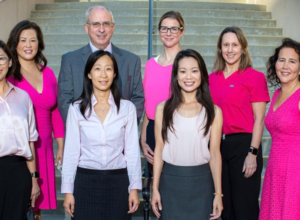
Photographed – front row (from left to right): Yuan Yuan, MD, Tina Wang, MD, Tiffany Shaw, MD, Ramona Kyaw, MD, and second row (from left to right): Jeannie Shen, MD, James Andersen, MD, Amy Polverini, MD, Alicia Terando, MD. Not photographed: Ruth Williamson, MD.

Growth Broadens Patient Access to Innovative Treatment Options and Top-Ranked Care, Close to Home

Huntington Cancer Center, an affiliate of Cedars-Sinai Cancer, welcomes nine oncology specialists to its program. These cancer surgeons and oncologists will bring their expertise to Huntington Cancer Center and provide residents of the San Gabriel Valley with access to Cedars-Sinai Cancer clinical trials and innovative treatment options.

The nine cancer specialists are all highly regarded throughout the community and have chosen to join the Huntington Cancer Center after serving at other local institutions, or being in private practice. They will also hold Cedars-Sinai faculty titles.

“It is my pleasure to welcome these nine oncologists to our Huntington Cancer Center,” said Lori J. Morgan, MD, MBA, president and CEO, Huntington Health. “These world-class physicians join a dedicated team of nurse navigators and cancer professionals to offer the latest research-driven treatments and access to Cedars-Sinai clinical trials. We are thrilled to offer this expert care to our cancer patients, right here in Pasadena.”  

Dan Theodorescu, MD, PhD, director of Cedars-Sinai Cancer and the PHASE ONE Foundation Distinguished Chair shared his enthusiasm with the larger Cedars-Sinai Cancer community. “The utmost goal of our affiliation with Huntington Cancer Center is to provide patients living in the San Gabriel Valley with access to the full range of coordinated, advanced treatments available through Cedars-Sinai Cancer,” said Theodorescu. “Huntington Health has an outstanding reputation for cancer care, and we are pleased to join with them in not only expanding the community’s access to quality cancer diagnostics and treatments, but also exciting plans for offering innovative clinical trials and other research opportunities to patients that seek care in the San Gabriel Valley.”

Huntington Cancer Center will be led by medical director Howard Kaufman, MD, a cancer specialist who has practiced at Huntington Health for 17 years.   Kaufman, who is board-certified in general surgery, fellowship trained in gastrointestinal surgery, and a leader in the field of colorectal surgery, was the first surgeon on the west coast to perform a single port laparoscopic colon resection. He earned his medical degree from The Johns Hopkins University School of Medicine and completed his residency in surgery at Johns Hopkins. “We are honored that so many of the San Gabriel Valley’s best cancer specialists have chosen to join the Huntington Cancer Center,” Kaufman said. “Their expertise, coupled with the excellence offered through Cedars-Sinai Cancer, will greatly benefit our patients and our community.”

The nine board-certified oncologists are:

  • James Andersen, MD, a plastic surgeon, specializes in reconstructive microsurgery for cancer patients. Before joining Huntington Cancer Center, he was director of plastic and reconstructive surgery at City of Hope National Medical Center, where he practiced for nearly 30 years.
  • Ramona Kyaw, MD, a radiation oncologist, specializes in the treatment of gynecological cancer. She has worked with the Huntington Cancer Center since 1997.
  • Amy Polverini, MD, is medical director of breast surgery at Huntington Cancer Center. She first came to Huntington Hospital as a high school volunteer, later completing a surgery rotation there as she pursued a medical degree from Keck School of Medicine of USC. Polverini has additional training as a physician consultant in wound care and is actively involved in breast cancer clinical research.
  • Tiffany Shaw, MD, regional medical director of Supportive Care Medicine, specializes in oncology, hematology, hospice and palliative care, and internal medicine. Prior to joining Huntington Cancer Center, she practiced hematology and oncology with Sutter Health in San Mateo, California.
  • Jeannie Shen, MD, is a general surgeon and a fellowship-trained breast surgeon with more than a decade in private practice. She now serves as medical director of the breast program at Huntington Cancer Center and medical director of Huntington Hospital International Health. Shen previously served as director of breast surgery at Huntington Hospital and as an associate clinical professor at UCLA Health.
  • Alicia Terando, MD, Huntington Cancer Center’s regional medical director of surgical oncology, specializes in breast cancer and melanoma. She previously was surgical director of the comprehensive breast program at Keck School of Medicine of USC.
  • Tina Wang, MD, specializes in the treatment of breast, liver and lung cancer, with a focus on immunotherapy. Her focus is in hematology, oncology and internal medicine and she is an assistant professor at City of Hope and UCLA Health.
  • Ruth Williamson, MD, now clinical director of Radiation Oncology, has served as medical director of radiation oncology at Huntington Cancer Center since 1998 and medical director of breast cancer services since 1996. She specializes in the treatment of breast cancer and the development of psychosocial support programs for breast cancer patients and their families.
  • Yuan Yuan, MD, PhD, director of Breast Oncology, specializes in oncology, hematology and internal medicine, and specializes in research related to breast medical oncology. Prior to joining Huntington Cancer Center, she was medical director of breast cancer immunotherapy at City of Hope.

Huntington Cancer Center also is expanding its facilities with a new infusion center, now open. As part of Huntington Health, the infusion center will make it easier to coordinate patients’ care, providing convenience for patients and physicians. For more information about Huntington Cancer Center, go to: www.huntingtonhealth.org/cancer

Understanding the menopausal belly

Understanding the menopausal belly

Menopause can bring a variety of changes to your body. You may experience symptoms such as hot flashes, vaginal dryness, insomnia and more. You may also notice changes to your belly shape and size. When you reach menopause, gynoid fat (found between your hips and upper thighs) often decreases, while android fat (found between your breasts and hips) increases. At the same time, the fat insulating your abdominal organs — visceral fat — can also increase. There are many reasons why body shape changes during menopause, including weight gain from decreased muscle mass and a slowed metabolism. Other factors such as less physical activity, less sleep, an unhealthy diet and caregiver stress may also add pounds. And lower estrogen levels may play a role. The good news is there are steps you can take to combat weight gain and build your health in the years around menopause:

  1. Exercise regularly.

Exercise can help keep weight off. Physicians recommend at least 30 minutes of physical activity on most days of the week to improve health and mood in general. Ask your doctor about what exercise routine might be right for you.

  1. Maintain a healthy diet.

It’s important to integrate vitamins, minerals, fiber, calcium and other essential nutrients in your diet. Try your best to reduce your simple carbohydrate intake. Keep in mind your body does not need as many calories post-menopause as it did pre-menopause.

  1. Menopausal hormone therapy/hormone replacement therapy.

Some studies show that prescribed low-dose estrogen or a combination of estrogen and progestin may help reduce visceral fat and body mass index. This treatment isn’t right for everyone, so be sure to discuss the benefits and risks involved with your doctor.

Weight and shape changes during menopause — and the stress they may cause —are completely normal. However, if your menopause symptoms are negatively impacting your daily life, talk to your doctor about what steps you can take to make the transition easier.

Sources: U.S. Department of Health and Human Services Office on Women’s Health; and Next Avenue.

To learn more about menopause, we invite you to register to attend Senior Care Network’s Noon Hour lecture All About Menopause on October 12, 2022.

Arm Yourself Against the 2022-23 Flu Season

Arm Yourself Against the 2022-23 Flu Season

Cedars-Sinai Infectious Disease Experts Predict a Tough Flu Season Ahead, Urge Public to Get Vaccinated

Amid the loosening of COVID-19 precautions and a sharp increase in flu cases in the Southern Hemisphere, Cedars-Sinai experts are warning the public to prepare for a bad flu season this year.

“Australia and New Zealand had their most severe flu season in five years,” said infectious disease specialist Soniya Gandhi, MD, associate chief medical officer at Cedars-Sinai. “We tend to see similar influenza patterns in the Northern Hemisphere, and while there is no guarantee that this will happen, it really highlights the importance of getting the flu shot this year.”

While people observed COVID-19 pandemic safety measures—like wearing face masks and washing hands frequently—during the past two years, the flu all but disappeared in the U.S. But this year could be different, as mask mandates have lifted, and more people are getting back to socializing.

“People are tired of respiratory viruses, and they’re trying to resume normal lives,” said infectious disease specialist Kimberly Shriner, MD, at Huntington Health, a Cedars-Sinai affiliate. “I worry that since COVID-19 is beginning to settle down a little, there may be an impression that influenza will as well.”

Shriner and Gandhi spoke with the Cedars-Sinai Newsroom about what this flu season might bring and why it’s wise to be prepared and get a flu shot.

What concerns you about the current flu season in the Southern Hemisphere?  

Australia has a robust flu-tracking system, and their flu season, which runs from April to October, offers clues as to what’s in store for the U.S.

The flu wasn’t only severe in Australia this year—it came on fast.

“Influenza started circulating two months earlier than normal, and the largest number of cases were in children ages 5 to 9,” Gandhi said. “This really emphasizes that even young people should be getting their flu shot.”

The silver lining? Australia saw lots of influenza A (H3N2), a strain that’s included in this year’s vaccine, Gandhi said. While it’s too early to assess the vaccine’s effectiveness in the U.S., she said it’s reassuring to know that this strain of the virus is covered in the current vaccine.

What other factors could affect our upcoming flu season?

“We’ve been very protected these past two years, and we haven’t had an opportunity for the flu virus to circulate widely,” Shriner said. “But now, the masks are off.”

Because people were more isolated in recent years, immunity to the flu in the population declined. The combination of reduced immunity and relaxed safety measures means the public will be doubly vulnerable to a circulating respiratory virus.

“When you throw all of that into the mix, it’s not surprising that we may have the worst flu season we’ve seen in a while,” Gandhi said.

Why should people take the flu seriously?

Influenza is a serious illness, especially for the elderly and those who are immunocompromised, like cancer or transplant patients.

“The flu can kill up to 50,000 people annually, and that certainly is a concern we have about this impending season given our preview of coming attractions in the Southern Hemisphere,” Shriner said.

In the U.S., influenza typically circulates from November through April, coinciding with the winter holidays when people gather indoors, and when COVID-19 tends to surge.

“An influx of hospitalizations from COVID-19 and the flu could stress the healthcare system and impact staffing if many healthcare workers are out sick,” Gandhi said. “It’s yet another reason to get the flu shot and the new Omicron booster as well.”

Why get the flu shot?

The past two years have demonstrated the capacity of vaccines to prevent diseases and save lives. “We’ve seen that dramatically with COVID-19, and I think the same is true of influenza,” Shriner said. “Vaccination often helps the individual, but it also protects those who either cannot receive a vaccine or who won’t respond very well to it.”

By limiting the spread of flu and preventing severe illness, the flu shot also can help maintain hospital capacity, Gandhi said. She cited a recent study of adults that showed the flu vaccine reduced their risk of ICU admission by 26% and death by 31%.  

“The flu and COVID-19 vaccines are important on a personal level, and they’re critical from a public health standpoint,” Gandhi said.

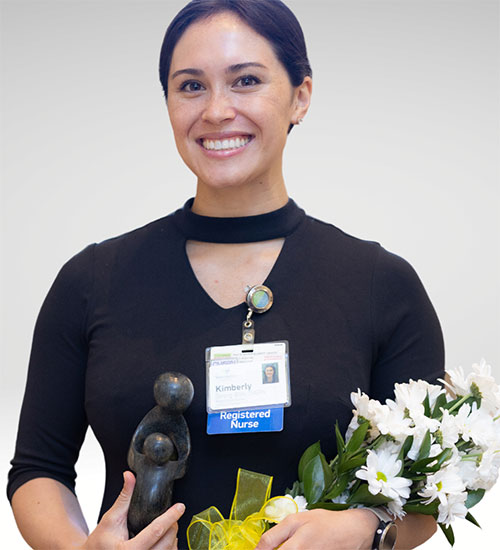
Congratulations to November 2021 DAISY Award winner, Kimberly Strong, RN, 4 West

Congratulations to November 2021 DAISY Award winner, Kimberly Strong, RN, 4 West
Kimberly Strong, RN - Daisy award winner
DAISY Award winner, Kimberly Strong, RN, 4 West

As a designated Magnet hospital, Huntington Health is a recognized leader in nursing excellence. Every day, our nurses go above and beyond for our patients, and we are proud to recognize them for their efforts. Huntington Health’s November 2021 DAISY Award winner, Kimberly Strong, RN, 4 West, was nominated by a patient who wrote the following:

“The department in general is great. But my nurse is a great nurse. Kimberly is empathetic, punctual, caring and a great listener. I feel like she goes the extra mile and provides exceptional care. She looked after my every need, both physical and emotional. I’ve never met such a caring nurse, and I will definitely never forget her. She sets the bar high for the other nurses in this hospital. I would definitely nominate her for a DAISY Award. She is awesome and truly deserves it!”

Congratulations, Kimberly, for your well-deserved DAISY Award! For more information about the DAISY Award, please visit www.huntingtonhealth.com/daisyform.

What to know about preventive care

What to know about preventive care

Preventive care is an essential tool in helping to maintain your overall health — especially if you’re an older adult. Preventive health services can stop the onset or progression of disease and disability, ultimately helping patients avoid trips to the emergency department. “The importance of preventive care cannot be overstated,” says Huntington Health-affiliated emergency medicine physician David Ulick, MD. “Many diseases are treatable or even curable with early detection.”

The specific health screenings and services you need may depend on your gender, age, race, personal and family history. Common examples are:

  • Annual check-up: No matter your age, it’s crucial that you visit your doctor once a year to catch health concerns early.
  • Mammogram: This is routine x-rays of breast tissue to check for cancer. Starting at age 40, women who are at average risk for breast cancer should get a mammogram every year.
  • Colonoscopy: This exam is used to find problems in the colon or rectum, such as colorectal cancer. All adults aged 45 to 75 should be screened at least once every 10 years.
  • PSA blood test: Starting at age 50 (or 45 for African Americans and people with first-degree relatives who had prostate cancer), men should discuss prostate cancer screening options like the PSA blood test with their doctor.
  • Pap test and/or HPV test: Women should get screened regularly for cervical cancer, typically every three to five years. Women who are 30 or older should talk to their doctor about which testing option is right for them: a Pap test, an HPV test or both.
  • Osteoporosis screening: Women ages 65 and over should get tested to detect their bone strength every 15 years.
  • Immunizations: Important shots for older adults include the COVID-19 vaccine, the annual flu vaccine, the pneumococcal vaccine and the shingles vaccine.

Talk to your doctor about what other preventive care steps are right for you. “It all begins with a visit to your primary care physician,” says Dr. Ulick. “Don’t wait until you have symptoms to see your doctor.”

Below are some pro tips for scheduling your appointments:

  • Call your doctor early: Call first thing in the morning if you can. Avoid calling when the office is closed, such as after hours or during lunchtime. Visit www.huntingtonhealth.org/find-a-doctor if you need to find a trusted physician to help keep you healthy.
  • Schedule efficiently: Set up your next annual physical exam at this year’s check-up. Schedule a “day of prevention” by lining up a few appointments; you may want to start your day with a physical exam, since routine blood tests may require fasting beforehand.
  • Don’t forget: Keep all appointments on your calendar. Set up reminders via alarm or designated accountability partner such as a spouse, family member or friend.

As you schedule and attend your appointments, remember: Your caregiving team is doing everything they can to help you. Please practice patience and kindness.

Sources: AARP; CDC; NIH; and Healthline.

Huntington Health Presents Heart of Huntington Award to Recipients and Finalists

Huntington Health Presents Heart of Huntington Award to Recipients and Finalists

Recently, Huntington Hospital held its fourth ceremony to honor team members with the Heart of Huntington Award. The quarterly presentation recognizes two finalists and two recipients that have been nominated by their peers for their outstanding compassion, caring and collaboration. To acknowledge the vast and varied contributions by team members, there is a category for those who work at or around the bedside (clinical) and those whose efforts support care for our community in other ways (non-clinical).

During the ceremony, Lori J. Morgan, MD, MBA, president and CEO, Huntington Health, presented Heart of Huntington Awards to Rida Selbak Rivera, physical therapist and Luis Malpica, intake coordinator at Huntington’s Della Martin Center.

Rivera received the clinical Heart of Huntington Award for her mission to provide, model and teach compassionate care. Giving exceptional care to her physical therapy patients in the hospital’s 4 West unit is just one aspect of her work; she also extends this care to her colleagues. She welcomes new employees with open arms, gives helpful instructions on how to improve skills and build trust with patients, and even takes time out of her busy day to write appreciation notes to employees in the department. A consummate teacher and team player, Rivera was also one of Huntington’s Language of Caring trainers for the empathy communication model, Heart-Head-Heart, launched in 2019. Rivera was lauded for “living” Huntington’s mission to provide excellent health care and compassionate service to each person.

“Whether it’s working with colleagues or caring for patients, Rida embodies the spirit of our community in her commitment to treating others with respect, kindness and by upholding integrity in her actions,” said Dr. Morgan.

Luis Malpica received the non-clinical Heart of Huntington Award for his commitment to Mental Health Month, and leadership and teamwork at Huntington’s Della Martin Center, which provides inpatient and outpatient mental health services. Malpica has worked at Huntington for 14 years – seven of those in the emergency department as a patient access representative. At Della Martin Center, not only does he admit and register incoming patients; he champions the mental health field, making it his mission to educate staff and the community. Most notably, he was recognized for the impeccable job he does each year spreading awareness during Mental Health Month through planning events, organizing speakers, promoting patient well-being and providing resources to the community.   

“People like Luis – thoughtful, kindhearted and genuine in their desire to help others – are changing the world. And we are so lucky to have him at Huntington,” Dr. Morgan said.

Dr. Morgan also recognized clinical finalist, Gina Bardo, RN, nurse care manager, Senior Care Network, and non-clinical finalist, Cathy Hock, manager, inpatient clinical solutions, Huntington Health.

Bardo was commended for establishing lasting relationships with clients and performing acts of kindness that fill people with hope and happiness. Dr. Morgan gave an example of one such act:  when Bardo learned that a former client had recently become unhoused, Bardo bought food and gave it to the client to ensure nourishment throughout the weekend.

Cathy Hock was honored for always putting her team first with a commitment to health, safety and satisfaction. One nominator referred to Hock as the “heart” of their team. She was also revered for her ability to problem-solve, effectively communicate and step in and support different departments, particularly IT. Dr. Morgan described Hock as an “excellent role model and a great example of someone who represents Huntington values.”

For more information about the Heart of Huntington Award, go to: www.huntingtonhealth.org/hoh


Huntington Health offers free flu shot clinics to community

Huntington Health offers free flu shot clinics to community

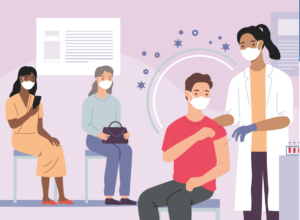
Flu season is just around the corner, and it is important that Pasadenans and our neighbors throughout the San Gabriel Valley and surrounding communities take steps to guard against the flu, especially as we continue to battle COVID-19.

According to the CDC, seasonal flu is associated with large numbers of hospitalizations. These estimates of flu-related hospitalizations highlight flu’s potential severity, and that being sick with flu can also make some health conditions worse (such as lung disease) or lead to other complications that require hospitalization. Flu vaccination is the first and best way to prevent flu and its serious complications. Everyone 6 months and older should get vaccinated against flu yearly, particularly people at increased risk for serious complications including young children, adults 65 years and older, and people with certain chronic medical conditions.

“Throughout COVID-19, we learned to adopt infection prevention measures to help limit the spread of COVID, and in doing so, these measures also limited the spread of the seasonal flu,” said Kimberly Shriner, MD, medical director of infection prevention and control, Huntington Health. “Now that many of these protective tactics have been removed (though still encouraged), the impact of the flu could be particularly severe this year. Please consider getting your annual flu shot at one of our community clinics or at your local pharmacy, and encourage your loved ones to as well. Thank you for keeping our community healthy.”

Huntington Health is pleased to offer free flu shots at various locations throughout Altadena, Pasadena, San Marino and South Pasadena in the coming months. Flu vaccine requirements:

• At least 18-years-old, or giving consent for your child, ages 9-17 years

• No allergy to eggs or the influenza vaccine

• No history of Guillain-Barré syndrome

• Do not have a suspected or confirmed COVID-19 infection

• Do not have any COVID-19 or flu-like symptoms.

There is a limited supply of vaccines for each clinic. All sites listed are open to the public. No reservations or appointments are needed and insurance isn’t required. Standard dose will be provided, not the high dose, which is recommended for persons 65+.

For a listing of free flu clinics and for more information about the flu, please go to: www.huntingtonhealth.org/flu.

About Huntington Health

Huntington Health, www.huntingtonhealth.org, an affiliate of Cedars-Sinai, offers the full spectrum of care for every need: Whether at our hospital, urgent care, ambulatory surgery center, cancer center or doctor’s office, we’re here to care for the physical, mental and social well-being of every person. Huntington Health is home to the largest emergency department and only level-II trauma center in the San Gabriel Valley. And our Family Birth Center and level-III neonatal intensive care unit (NICU) give babies the safest start to life.  Learn more about us on social media: Facebook, Twitter and Instagram

# # #

The American Hospital Association Elects Lori J. Morgan, MD, MBA, President and CEO, Huntington Health, to its Board of Trustees

The American Hospital Association Elects Lori J. Morgan, MD, MBA, President and CEO, Huntington Health, to its Board of Trustees

Huntington Health recently has announced that Lori J. Morgan, MD, MBA, president and CEO, has been elected to the American Hospital Association’s (AHA) Board of Trustees for a three-year term beginning Jan. 1, 2023.  The board is the highest policymaking body of the AHA and has ultimate authority for the governance and management of its directions and finances. Dr. Morgan will be the chair of AHA Regional Policy Board 9.

“I am honored that the AHA has entrusted me with this significant position. The AHA’s commitment to ensuring equitable care and health improvement for all is directly in line with Huntington’s mission to provide excellent, compassionate health care inside and outside of our walls. In this role, I hope to further the accessibility, quality, and affordability of care for all patients and support wellness initiatives for dedicated caregivers both at home and across the nation,” said Dr. Morgan.

Most recently, Dr. Morgan’s leadership around the recent affiliation with Cedars-Sinai has further strengthened Huntington’s ability to provide the community with accessible, coordinated, high-quality care, close to home.  The affiliation enables many different types of collaborations between Cedars-Sinai and Huntington on clinical services, research, clinical trials, and education.  

Dr. Morgan has also had a major focus on setting physician strategy and expanding clinical programs and led a major construction project for new operating rooms, cardiac catheterization labs and earthquake retrofitting.

Dr. Morgan received her doctorate in medicine from the University of Washington School of Medicine and her MBA from Pacific Lutheran University. She has also served on the board for the Hospital Association of Southern California and the California Hospital Association.

For more information about the AHA and its board selectees, click here.

About the American Hospital Association

The American Hospital Association (AHA) is a not-for-profit association of health care provider organizations and individuals that are committed to the health improvement of their communities. The AHA advocates on behalf of our nearly 5,000 member hospitals, health systems and other health care organizations, our clinician partners – including more than 270,000 affiliated physicians, 2 million nurses and other caregivers – and the 43,000 health care leaders who belong to our professional membership groups. Founded in 1898, the AHA provides insight and education for health care leaders and is a source of

information on health care issues and trends. For more information, visit the AHA website at www.aha.org

# # #

Huntington Collection, Pasadena’s Unique Furniture Resale Shop, Reopens in East Pasadena

Huntington Collection, Pasadena’s Unique Furniture Resale Shop, Reopens in East Pasadena

Earlier this month, Huntington Health hosted a ribbon-cutting ceremony for the relocation and reopening of the furniture, home décor and clothing resale shop Huntington Collection. The shop, which is now located at 2670 East Colorado Blvd., Pasadena, donates all proceeds to the Senior Care Network (SCN), a nationally recognized program that helps more than 15,000 older and disabled adults remain healthy and independent.

“Huntington Collection has a long history in Pasadena. Not only has it provided our community with a beloved place to find recycled treasures; for almost 40 years its earnings of over $10 million have given thousands of seniors essential services,” said Lori J. Morgan, MD, MBA, president and CEO, Huntington Health.

The event was attended by Huntington Collection supporters, including the City of Pasadena’s Mayor Victor Gordo and Councilmember Gene Masuda, Huntington SCN, and Huntington Health’s board members and executive management team.

“The Huntington Collection is a treasure in the community. It’s a reminder of the complexity involved in caring for those in need. I’d like to congratulate Huntington Health for taking the time to think out of the box to create this resale store, which helps bring added resources to people that need them most,” said Mayor Gordo.

Dr. Morgan recognized the City of Pasadena for their support and thanked Huntington Health Chairman of the Board Jaynie Studenmund and Vice Chairman of the Board Paul Johnson for their commitment to ensuring the continuity of the program. She also acknowledged the dedication of team members from Huntington Collection, SCN, and Huntington’s volunteer services and construction department. “Your hard work is being celebrated today,” Dr. Morgan announced.

Councilmember Masuda also spoke at the ceremony and commended the program: “The Huntington Collection has a wonderful reputation for selling great items. However the best thing about this store is that sales support services for older adults, and that’s so important for our community.”

Huntington Collection is now open Mondays – Fridays, 10 a.m. to 3 p.m. To learn more about the shop and for information on how to make a qualified donation, visit: www.huntingtoncollection.org

Huntington Health employees kick-off the school year with backpack donations to the community

Huntington Health employees kick-off the school year with backpack donations to the community

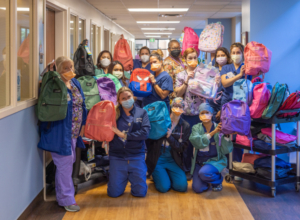
With back-to-school fever filling calendars and social media timelines, there’s no question – class is officially in session. And Rosemarie Cervantes, RN, clinical manager of the mother baby unit and interim manager of the Family Birth Center, Huntington Health, was inspired to help. “I was watching the news, and there was a story on how expensive school supplies are, especially backpacks,” said Rosemarie. “I love to give back to the community and get involved how I can and figured a back to-school drive would be a great way to help local kids in need.” Rosemarie rounded up the troops in the Family Birth Center and mother baby unit, including OB physicians, to organize Operation Backpack for underprivileged children in Los Angeles County. Naturally, team members wanted to give more, so they collected school supplies to fill the backpacks – from binders, paper and folders to markers, crayons, pencils and snacks.

In less than a week, they collected more than 60 backpacks, which Stephanie Boyd, PFC, and her two daughters stuffed to the brim with copious amounts of supplies. Attached to each backpack was a handwritten note that wished students a great year ahead. The backpacks were distributed to Crossroads of Southern California, which provides resources to underprivileged youth, and St. Gertrude’s church in Bell Gardens. Both organizations were recommended to Rosemarie by a formal spiritual care colleague Brother Richard Hirbe. This was the first back-to-school drive that Rosemarie organized at Huntington Health, with 167 team members participating. And it’s only the beginning. “I want to make this an ongoing thing – to find different ways for our employees to give back to the community,” shared Rosemarie. “I’m already thinking of holding a donation drive for prom dresses in the spring!”