Here for a Healthier Community

Summer camps and COVID-19: Advice on how to keep your child (and family) healthy

Summer camps and COVID-19: Advice on how to keep your child (and family) healthy

By John Rodarte, MD, pediatrician, Huntington Health Physicians
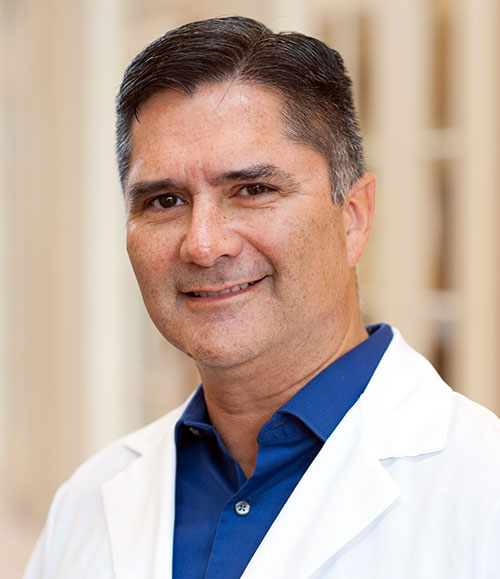
John Rodarte, MD, pediatrician, Huntington Health Physicians

Whether or not to let your child attend summer camp is a difficult decision for many parents during this pandemic time. Many camps have been cancelled or changed to a virtual style, while others have modified their activities and procedures to comply with local health guidelines.  

Day camps are probably the easiest way to fulfill your child’s summer camp plans while still maintaining a reasonable amount of safety.  Parents can first make sure the camp has adequate safety measures, such as keeping the children in smaller groups without mixing students between groups, maintaining social distancing at least 6 feet apart when possible or having more outdoor activities that provide better aeration, limiting the sharing of items and cleansing them and other surfaces regularly, and making sure campers and staff stay home if feeling ill or if exposed to someone else with COVID-19, or come up COVID-19 + themselves. If possible, food and drinks are safest if brought from home and not shared amongst campers. Routine wearing of masks is also advised, especially when adequate social distancing is not always possible. And of course, frequent hand washing with soap and water or a 60% alcohol hand sanitizer is advised. Camp staff should regularly remind children of safety measures, including frequent hand washing and not touching their faces.  

These types of measures are most easily upheld with slightly older school age children who are good at following directions. Very young children have a harder time doing things like keeping masks on or maintaining appropriate social distancing.  

Sleep-away camps pose a more difficult challenge for maintaining safety measures.  Again, if children can keep to one small pod of fellow campers and staff in their sleep quarters, with appropriate social distancing within the sleep area, that would be most desired for safety. Ideally, recreational activities would be mostly outdoors (which is the case for most camps anyway).  Meal times can be most challenging, since camps often have buffet lines which are more prone to the spread of germs. Find out your camp’s  protocol for limiting exposure  to illness with meals. 

As parents, we should remind our own children about safety measures they can routinely do themselves, like keeping their mask on (over their nose too!), maintaining a distance of 6 feet between themselves and others when possible, frequent hand washing, not sharing food or other items with their friends, and trying to not touch their face.  Also remind them that these measure are not just to protect themselves, but they help keep other campers safe and help keep their own family members safe, too, including mom and dad! 

In the end, each family must assess their own comfort with sending their child to camp during this COVID-19 pandemic. For those families with very high risk members at home, including a child, parent or grandparent who falls into a high risk category, postponing summer camp this year might be the wisest choice. 

In many ways, summer camps will be a trial run for kids returning to school, so learning these safety measures is really just a part of the “new norm” for children for the time being. 

Below is a link to the CDC website with very detailed information regarding summer camp during the COVID-19 era. 

https://www.cdc.gov/coronavirus/2019-ncov/community/schools-childcare/k-12-childcare-guidance.html


Huntington Hospital’s Response is All About Teamwork

Huntington Hospital’s Response is All About Teamwork

By Jaynie Studenmund, Chair of the Board, Huntington Hospital

Jaynie Studenmund headshot

As printed in Outlook Newspapers

To our Huntington Hospital community:

Our world has changed extraordinarily over the past several months in ways no one could have predicted at the start of 2020, a new decade.

We’ve faced an unprecedented pandemic that has radically changed the way we live our lives and think about our family, friends, and society. We’ve seen a worldwide movement against racial injustice in response to the murder of George Floyd and other societal disparities – including those in health care. (To say nothing of the economic disruption, unemployment rate, and seeming “irrational exuberance” of the stock market, all of which carry major, ongoing impacts.) The confluence of these events further underlines the truth that keeping our community safe and close requires each and every one of us to work together. Please know that our board and management are reevaluating our diversity and inclusion programs to be more responsive and robust.

At Huntington, true to our mission to take care of the health needs of our local community, we see this kind of collaboration in action every day. We see it in our hospital staff’s tireless commitment to providing compassionate care. We see it in the incredible outpouring of support from all of you. So many of you have reached out to say thank you in extra special and meaningful ways. This has warmed the hearts of our ‘Team Huntington’. In particular, I want to acknowledge the exceptional leadership of our CEO, Dr. Lori Morgan, alongside our physicians, nurses, frontline staff and managers who worked devotedly around the clock for our patients and community. Many have said that the pandemic reaffirmed why they chose a career in health care, and they remain even more committed to the health of our patients and community.

With California’s early ‘safer at home’ orders, we were able to avoid the untenable number of COVID-19 cases that some models predicted which would have burdened our healthcare resources well beyond their capacity. Even still, Huntington Hospital had one of the highest volumes of coronavirus patients in California. We were able to care for all patients within our own hospital walls and without needing to lean on our surge plan elements, which included a mobile medical unit on our hospital campus and the Pasadena Convention Center, which was enacted in partnership with the City of Pasadena. (We were also proud to support community testing efforts at the Rose Bowl with our nursing staff, in addition to testing patients at our hospital and outpatient test center). At this time, Pasadena City Council voted to dismantle the care center at the Pasadena Convention Center. Huntington Hospital is also moving to take down elements of our surge plan.

Thanks to the good work of our community and hospital staff, we’ve seen a significant decrease in the number of COVID-19 patients at Huntington Hospital since the peak we experienced in late April. As we closely monitor patient trends, especially in light of the recent re-opening of society and increased gatherings, we have experienced an anticipated uptick in COVID-19 positive patients (our website shows our daily COVID-19 census, for those who are interested in tracking). Rest assured, we have ample resources to treat our community and remain safe for care and prepared to treat our patients throughout this chapter of healthcare history. I share a passionate plea with you all: As this pandemic marches on, each of us needs to remain vigilant and follow recommended public health guidelines, which include social distancing, wearing a mask in public and practicing good hand hygiene.

Our board of directors meets frequently with the hospital management team and physician leaders to closely monitor and assess the evolving pandemic. Following recommendations from health authorities – and armed with data that shows our infection prevention measures have been successful in preventing the spread of COVID-19 within our walls, we resumed elective surgeries on May 11. We have since re-opened many outpatient services (many of which offer both in-person and telehealth) and we remain open for all essential care services. Please, don’t delay needed care. Huntington remains safe for all patients. So, whether it be for a health-enhancing surgery, to deliver a baby or seek emergency treatment, we are here for you. (In fact, many babies were born at Huntington during the C19 surge, and each new life brought us all great joy.)

Looking forward, we individually and collectively contemplate the ongoing impact of the turbulence surrounding us and determine what we can – and must – do to move forward to enable a more just society. Our “next normal” is a journey, and it will require the best in all of us to get there.

In closing, I genuinely hope you and your loved ones are doing as well as can be expected during the unprecedented degree of challenges that face our nation and the world at large.  I believe that we will come out stronger as long as we work together and show compassion for one another. Compassionate community care – it remains at the heart of all Huntington Hospital stands for, now more than ever.

Tips for Wearing Masks in the Summer

Tips for Wearing Masks in the Summer

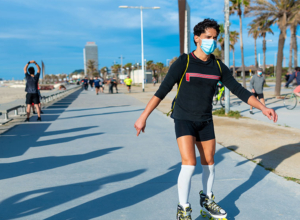
As we continue to live through this very difficult pandemic, it is important to enjoy some of the normal things in life. The outdoors is one of the least risky environments for coronavirus, as long as you continue to maintain social distancing (6 feet or greater). Ultraviolet light and vitamin D from sunshine will help your mood and your body, and exercise is an excellent way to diminish stress. That said, it is still important to remember that wearing a mask is one of the most effective ways to prevent you from infection or passing it on to others. Huntington Hospital infectious disease specialist, Kimberly Shriner, MD, offers the following suggestions to keep in mind:

  • In the heat and humidity of the summer, masks can become uncomfortable. Lightweight material, periodic safe breaks without the mask and good hydration can all make the mask wearing more tolerable.
  • Avoid heavy material masks and try to keep the mask dry. It must be worn close to the face to be effective but if you start feeling lightheaded or winded, then it’s time for a safe break.
  • Avoid masks that have a ‘vent’ (some commercially available N95 masks have this). Although they are cooler, they allow droplets to escape through the vent and thus are not preventing infection.
  • Disposable surgical masks that you can change out frequently are handy and effective and there are now many types of cloth masks available that are acceptable and reasonably comfortable. Have several to change out during long periods of mask wearing when you are in close proximity to others.
  • Masks can also be a great fashion statement, so enjoy wearing something that is comfortable, protective and pleasing.
  • Finally, wearing a mask says to others around you, ‘I care about your safety as much as mine’. Be a good citizen AND enjoy the summer. Wear a mask.

For additional information about wearing masks in the summertime, please visit: www.webmd.com/lung/news/20200617/masks-and-summer-heat-expert-tips#1

Safe, Compassionate Care Close to Home

Safe, Compassionate Care Close to Home

In early March, Huntington Hospital began instituting measures to prevent the spread of the novel coronavirus and help flatten the curve, such as cancelling elective surgeries and restricting visitors to the hospital. Even still, Huntington Hospital had one of the highest volumes of coronavirus patients in California. Thanks to the good work of the community, Huntington Hospital has seen a decrease in the number of hospitalized COVID-19 patients since hitting our peak in April, though we are closely watching as our city and state continue to loosen restrictions for spikes in cases.

“I’m incredibly proud of the community’s efforts to limit the spread of COVID-19 during this challenging time, and especially grateful for the outpouring of support for our caregivers,” says Lori J. Morgan, MD, MBA, President & CEO, Huntington Hospital.

Following recommendations from health authorities and bolstered by data that shows our infection prevention measures have been successful in preventing the spread of COVID-19 within our walls, Huntington Hospital resumed elective surgeries on May 11. The hospital is currently open for all essential care services and remains safe for all patients. “Now that we have entered a ‘new normal’ of living in this pandemic, we want to ensure our community feels safe about getting their own health needs met and aren’t delaying needed care,” Dr. Morgan, continues. “At the onset of the virus, many people were genuinely fearful about coming to the hospital for emergency care. It was an uncertain time. But essential health care should never be delayed. Now is the time to check-in with your physician or reschedule an important surgery or procedure. And if you need immediate care, please do not hesitate to dial 9-1-1 or come straight to the emergency room. We are here for you during this uncertain time and are dedicated to keeping you safe.”

Thanks in great part to the generosity of the community, Huntington Hospital has adequate supplies of personal protective equipment (PPE)— masks, gowns, gloves and other supplies needed to keep patients, nurses, physicians and employees safe. 

Huntington Hospital also uses the following infection prevention measures, including:

  • Universal masking and symptom screening for everyone entering our hospital. This includes taking each person’s temperature and enforcing our mask policy.
  • Pre-surgical and pre-procedural screening (COVID testing) efforts.
  • Enhanced cleaning facility-wide.
  • Dedicated COVID-19 units with enhanced air flows, traffic flows, and work flows.
  • Limited visitors to our campus and the ongoing suspension of our volunteer program.
  • Suspension or limitation of non-essential services.
  • Staff and physician training and education.

The hospital is still offering many virtual support groups for the community during this time, as well as services from the Senior Care Network. In addition, many of Huntington Hospital’s outpatient facilities have reopened with enhanced safety measures. For a complete list of these facilities and contact information, please go to: https://www.huntingtonhealth.org/our-services/outpatient/

As a reminder, each of us needs to remain vigilant and follow recommended public health guidelines, which include social distancing, wearing a mask in public and practicing good hand hygiene.

Huntington Hospital updates COVID-19 patient end-of-life visitation policy

Huntington Hospital updates COVID-19 patient end-of-life visitation policy

After cautious review by a team of clinical and infection prevention specialists, Huntington Hospital has extended the exception for end-of-life visitation to loved ones of COVID-19 patients.

Hospital data shows that our infection prevention measures have worked to contain the spread of the virus within our walls and we are grateful to have adequate PPE to help protect family members who wish to see their loved ones in these circumstances. With this information, our team, who meets weekly to discuss hospital policies related to COVID-19, felt it was able to make this compassionate exception to these patient families.

While we understand that it is difficult to not be able to visit or stay a loved one while they are in the hospital, our visitor policy is essential to support the health and safety of our caregivers and preserve our limited supplies of personal protective equipment (PPE) such as masks, gowns and more. For the time being, we remain closed to all other visitors, with exceptions listed on our visitor page.

The safety of our patients remains our guiding priority. For more information, please visit www.huntingtonhospital.org

Huntington Hospital Suspends COVID-19 Donation Center

Huntington Hospital Suspends COVID-19 Donation Center

Huntington Hospital has experienced the good fortune of being the recipient of thousands of donated N-95 masks, surgical masks, gloves, gowns and other crucial items to ensure the safety of our caregivers and patients. Thanks to this overwhelming response and generosity of our community, Huntington has decided to temporarily suspend its donation center while we continue fighting COVID-19.


Huntington Hospital’s donation center was located in the Huntington Collection, 766 S. Fair Oaks Ave., Pasadena. While that facility will no longer be the site for donated medical supplies, the hospital is still accepting handmade masks and surgical caps only. If you would like to donate these items, please mail your donation to Huntington Hospital, c/o Volunteer Services, 100 W. California Blvd. Pasadena, CA 91105.


If you are interested in learning about other ways to support Huntington Hospital, such as making a donation or giving life-saving blood to our Blood Donor Center, please visit: www.huntingtonhospital.org


The greatest gift you can continue to give to our hospital and the entire community, is to follow recommended social distancing guidelines, continue to wear a mask in public and practice good hand hygiene.


On behalf of every nurse, physician and employee at Huntington Hospital, we are so grateful for our generous community. We truly are stronger together.

A note from Huntington Hospital’s President & CEO, Lori J. Morgan, MD, MBA on the Minneapolis tragedy

A note from Huntington Hospital’s President & CEO, Lori J. Morgan, MD, MBA on the Minneapolis tragedy
Lori Morgan
Huntington Hospital’s President & CEO, Lori J. Morgan, MD, MBA

The tragic death of George Floyd in Minneapolis reminds us of the wound of inequality that this nation suffers still from today. The response to this tragedy reminds us of the individual and collective hurt caused by ignorance and complacency. In healthcare, we see racial disparities represented in higher rates of complications and mortality due to births, heart disease, cancer, stroke, and most recently COVID-19 in communities of color. As an industry and an organization, we need to look directly at our inaction to address these inequities and commit to improving healthcare for all in our community with compassion and dignity.

Our hearts are broken for our communities that continue to face injustice, and for the black community that has suffered deeply from this tragedy. The fight for justice, like all other challenges, cannot be fought alone and we offer our enduring support. It is up to us to create the society that we want to live in and that means we have a collective responsibility to call out discrimination in all its forms. As we see violence break out across in response to the terrible tragedy that occurred last week, we urge everyone to come together peacefully to advocate for an end to violence and oppression.

When we talk about our commitment to providing compassionate care, this must extend beyond our patients to everyone in our Huntington Hospital community. During difficult times like these, I am more grateful for our culture of compassion than ever. Our values are woven into the fabric of our organization in our mission statement and in the way we operate. I see the benefits of this as we learn and grow beside each other. I know that as a country and as a hospital, constant effort to improve is necessary for progress. We need each other now more than ever to move forward.

At Huntington Hospital, we want to continue building an environment that celebrates diversity and respects all no matter their culture, race, religion, sexual orientation or economic status. A part of this is recognizing that we don’t have all the answers. We depend on our community to listen to each other, and to speak up when you see injustice. I ask everyone to offer understanding and empathy to your colleagues, friends, and community members, and to seek each other’s support.

I also encourage everyone to engage with our communities and work with our neighbors to push for equity and justice in our society. The push towards a better society for all depends on collaboration both inside and outside our walls.

As I said, constant effort to improve is necessary for progress. Today, it’s our responsibility to put in the effort to pick each other up from this tragedy, and to strive to be better as we move forward. We have seen in recent months that we are stronger and more resilient when we stand together.  Let’s commit to stand and work together for a better, healthier future for all in our community.

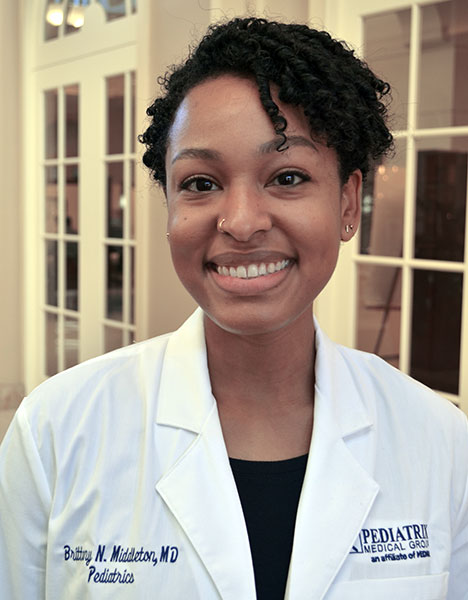
Brittany Middleton, MD, Medical Director, Pediatrics, on Multisystem Inflammatory Syndrome in Children (MIS-C)

Brittany Middleton, MD, Medical Director, Pediatrics, on  Multisystem Inflammatory Syndrome in Children (MIS-C)

What is MIS-C? What do we know about it?

Brittany Middleton
Brittany Middleton, MD, Medical Director, Pediatrics

MIS-C stands for Multisystem Inflammatory Syndrome in Children. It was previously called Pediatric Multisystem Inflammatory Syndrome (PMIS). This is a new and very rare condition affecting children who usually have evidence of a current or prior COVID-19 infection. The current theory is that the COVID-19 infection triggers an exaggerated immune system response that causes MIS-C. So it is unlikely the COVID-19 virus itself is creating the symptoms, but rather, the body’s response to that infection. Symptoms usually develop within approximately four weeks of a COVID-19 infection. It is not contagious. The symptoms of MIS-C overlap with those of Kawasaki disease and toxic shock syndrome, which is why you hear these diseases brought up in the conversation about MIS-C. Although MIS-C is not very common, some children become critically ill. Many of the children were previously healthy, so not much is known about the risk factors for developing MIS-C. The good news is that even though it is a serious condition, the vast majority of children who are diagnosed recover very well with prompt diagnosis and treatment.

What are the signs and symptoms of MIS-C?

The symptoms of MIS-C include fever of 100.4 F or higher for at least 24 hours and may include rash, red lips, tongue that looks like a strawberry, redness in both eyes, sore throat, swollen lymph nodes on the sides of the neck, swelling or redness of the hands and feet, abdominal pain, vomiting, diarrhea, confusion or excessive sleepiness. Respiratory symptoms are usually not present. After evaluation in the emergency room, laboratory tests may show general signs of inflammation and dysfunction in one or more of the body’s organs, such as the heart, lungs or kidneys.

How is MIS-C treated?

The treatment for Kawasaki disease has been promising in treating MIS-C. This includes intravenous immunoglobulin, which contains proteins called antibodies from various donors to help calm the body’s immune response. Steroids and/or aspirin are also a part of treatment for Kawasaki disease. Usually antibiotics will be started so that a serious bacterial infection isn’t missed while more definitive tests are in progress. If a child has low blood pressure, they will receive intravenous fluids initially, and if the blood pressure is still very low, they will be treated with medications to help raise the blood pressure to normal levels. There are additional medications that may be given to lower the exaggerated immune system response if the initial treatment does not help. Depending on the types of treatment required, the child will be hospitalized on the pediatric floor or admitted to a pediatric intensive care unit.I have tested positive for COVID-19.

What is the likelihood that my child will get COVID-19 and/or MIS-C?

The majority of children with COVID-19 have little to no symptoms and even fewer children who have COVID-19 infections develop MIS-C. The exact reason for this is not known. Research
is being done to better understand both COVID-19 and MIS-C in children. What you can do is try your best to prevent a COVID-19 infection in the first place by washing your hands properly for at least 20 seconds, socially distancing and wearing masks in public (children under 2 years old should not wear masks).

If I suspect my child has MIS-C, what should I do?

Call your pediatrician right away to discuss the symptoms your child is experiencing and/or take your child to the emergency room. 

View this article in PDF form

Huntington Hospital Provides Antibody Testing to Pasadena Fire Department & Pasadena Police Department

Huntington Hospital Provides Antibody Testing to Pasadena Fire Department & Pasadena Police Department

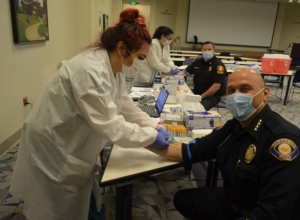
Huntington Hospital recently began a serologic testing program for Pasadena Fire Department and Pasadena Police Department to identify first responders who have been exposed to or recovered from coronavirus infections and potentially have protective antibodies.

“The dedicated members of the Pasadena Police Department and Pasadena Fire Department have been on the frontline of this pandemic,” says Lori J. Morgan, MD, MBA, president and CEO, Huntington Hospital. “They are often the first point of contact with confirmed and unconfirmed COVID-19 positive patients. This testing will provide important information in relation to the health and safety of these first responders. We are proud to offer this service as we continue to work together in support of our community during this challenging time.”

Upon receiving positive test results for COVID-19 antibodies from Huntington Hospital, police and fire department members will be encouraged to contact the local Red Cross on eligibility to donate their plasma for convalescent plasma (CCP) use. Protective antibody infusions are a well-established method to treat a variety of infections.  Current studies are showing its benefit for patients who are critically ill with COVID 19.  Like many factors associated with this pandemic, there is a shortage of CCP available for use.  

For more information about Huntington Hospital’s response to COVID-19, please visit www.huntingtonhospital.org/covid19.

Huntington Hospital’s Pet-Assisted Therapy (PAT) Volunteers Spread Joy to Caregivers to Celebrate Hospital Week!

Huntington Hospital’s Pet-Assisted Therapy (PAT) Volunteers Spread Joy to Caregivers to Celebrate Hospital Week!

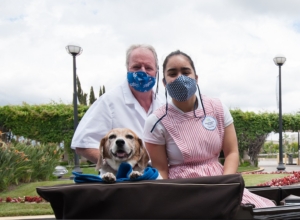
Because of Huntington Hospital’s COVID-19 precautions, we’ve had to suspend our popular Pet-Assisted Therapy (PAT) program. But yesterday, we got a treat. To celebrate Hospital Week and to honor our employees and caregivers, our volunteers drove their pooches to the hospital for a different kind of therapy: a canine cavalcade. From their cars at the Main Entrance of the hospital, our four-legged friends wagged their tails and waved their paws as our caregivers cheered, showing their appreciation.  Although we couldn’t stroke their fluffy ears, just the sight of them was “paws-itively” uplifting during this challenging time.