 English
 Espanol
 简体中文
简体中文 Tagalog
 հայերեն
 한국인
한국인 Tiếng Việt
 فارسی
فارسی русский
 日本
日本 عربي
عربي
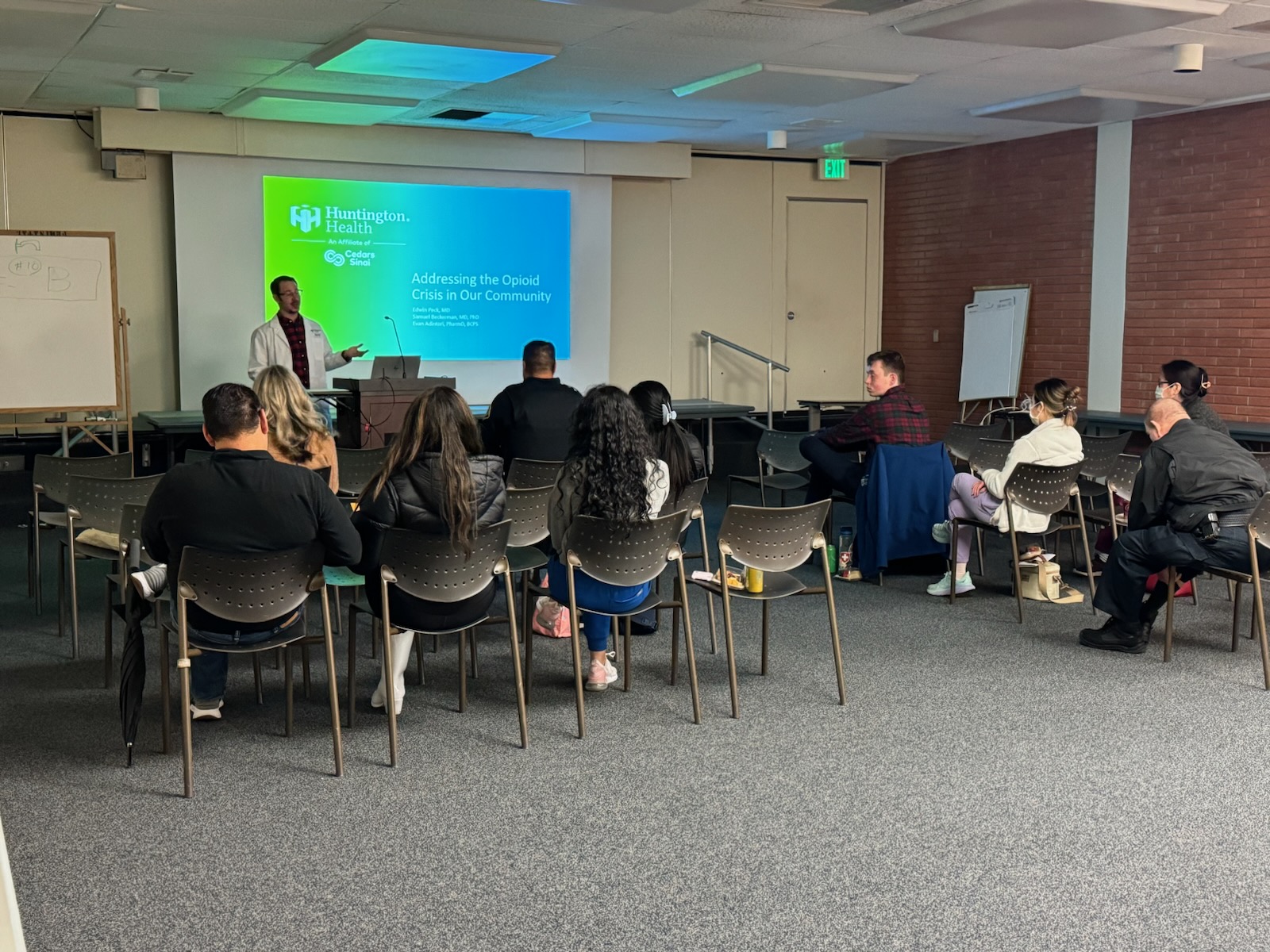
A newly published study from Huntington Health, a Cedars-Sinai affiliate, demonstrates how a pharmacist-led opioid overdose education and naloxone distribution (OEND) program significantly expanded community access to lifesaving overdose prevention resources, reaching thousands of residents across the San Gabriel Valley and Los Angeles County.
Published in the American Journal of Health-System Pharmacy, the study details a multidisciplinary initiative led by pharmacists, emergency physicians and community outreach nurses that provided opioid overdose prevention training to 3,466 community members and distributed 517 naloxone kits between 2021 and 2024. The expansion of the program beyond the emergency department resulted in an 84% increase in naloxone distribution compared with emergency department efforts alone.
“Naloxone education is a powerful form of community empowerment,” said Samuel Beckerman, MD, PhD, emergency physician and study co-author. “By teaching people how to recognize the signs of an opioid overdose and respond effectively, we can help reduce barriers, combat stigma and potentially save lives before emergency responders arrive.”
The study comes amid an ongoing opioid crisis that has had a significant impact on Los Angeles County. Between 2016 and 2022, fentanyl-related overdose deaths in the county increased more than 1,600%, while fentanyl-related emergency department visits and hospitalizations rose dramatically.
To address this challenge, Huntington Health launched a two-phase program. The first phase focused on identifying high-risk patients in the emergency department and providing free naloxone kits and overdose education prior to discharge. Through this effort, 281 naloxone kits were distributed to patients.
Building on that foundation, Huntington Health expanded its efforts into the community. Emergency department pharmacists and physicians partnered with community outreach nurses to deliver educational presentations in schools, libraries, community centers, farmers markets and other public venues. The program served a diverse audience, including students, parents, educators, public safety professionals, hospital staff and community members. An additional 236 naloxone kits were distributed through these outreach activities.
The curriculum was tailored to meet the needs of different audiences while maintaining consistent core messaging around overdose recognition, naloxone administration and emergency response protocols. Researchers noted that the program was low-risk, highly scalable and adaptable across a wide range of community settings.
According to the study authors, pharmacist-led education programs help address the “bystander effect,” a phenomenon in which individuals may hesitate to intervene during an emergency. Research has shown that bystander naloxone administration can dramatically improve the likelihood of overdose recovery, underscoring the importance of broad public education efforts.
The authors conclude that pharmacists are uniquely positioned to lead communication-based interventions that improve public awareness, increase naloxone access and strengthen community readiness to respond to opioid overdoses. Integrating overdose education into health system operations while building strong community partnerships may help reduce opioid-related illness and death.
Huntington Hospital’s fentanyl education program has been funded in part by the estate of Gordon D. and Sharon S. ViGario.
To read the complete study, go to: https://academic.oup.com/ajhp/advance-article/doi/10.1093/ajhp/zxag092/8540098
Study Citation
Adintori E, Pham T, Beckerman S, et al. Enhancing opioid overdose education and naloxone distribution through pharmacist-led community outreach. American Journal of Health-System Pharmacy, 2026.